How to repair a stone building?
Conservation Series: Stone
In our Conservation Series we want to explore what Conservation means to us, the materials that we work with and the craft that is involved in conserving and repairing buildings.
Craft, Care, and the Tools That Shape Our Approach
Working with stone is both a privilege and a responsibility. After more than a decade specifying stone, assessing its condition, and detailing sensitive repairs, we’ve learned that good conservation is grounded in three principles: minimal intervention, material compatibility, and long‑term stewardship. Stone holds the memory of its making and its weathering. Our role is to read those stories carefully and intervene with precision, restraint, and respect.
Understanding Stone
Every stone has its own character. Porosity, hardness, colour, and texture all influence how it behaves and how it ages. Even historical decisions, such as laying a stone in the wrong orientation, can take decades to reveal their consequences. Failures might present as stress cracking from settlement or vegetation, delamination from water ingress, or surface erosion accelerated by pollution and changing weather patterns.
When we assess a building, we begin with the visible signs: fractures, spalling, moisture staining. But the deeper work lies in understanding why the failure has occurred. Climate exposure, drainage patterns, salt movement, and structural shifts all play a part. Only by identifying the root cause can we determine whether a stone can be conserved, repaired, or (only when absolutely necessary) replaced.
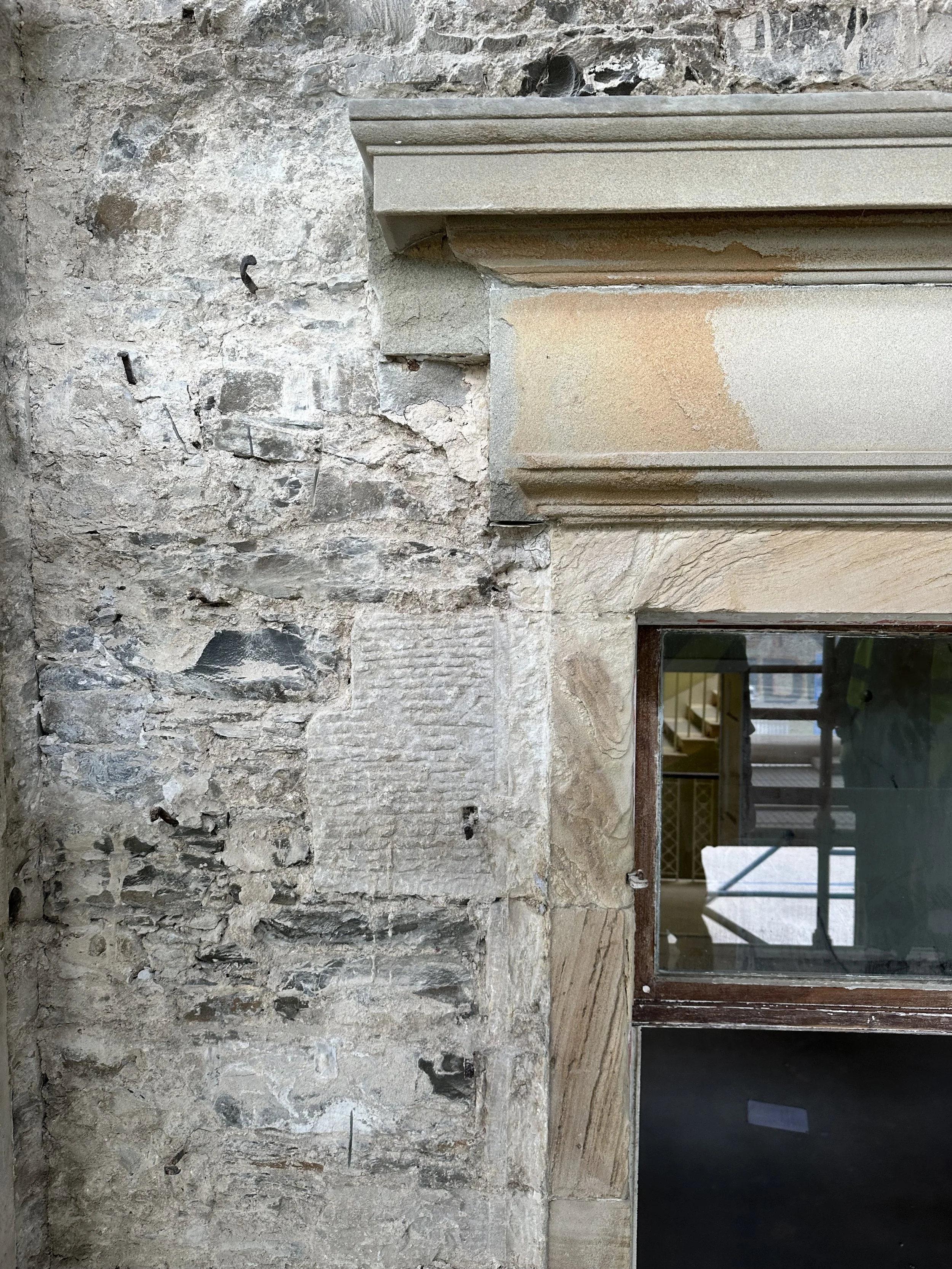
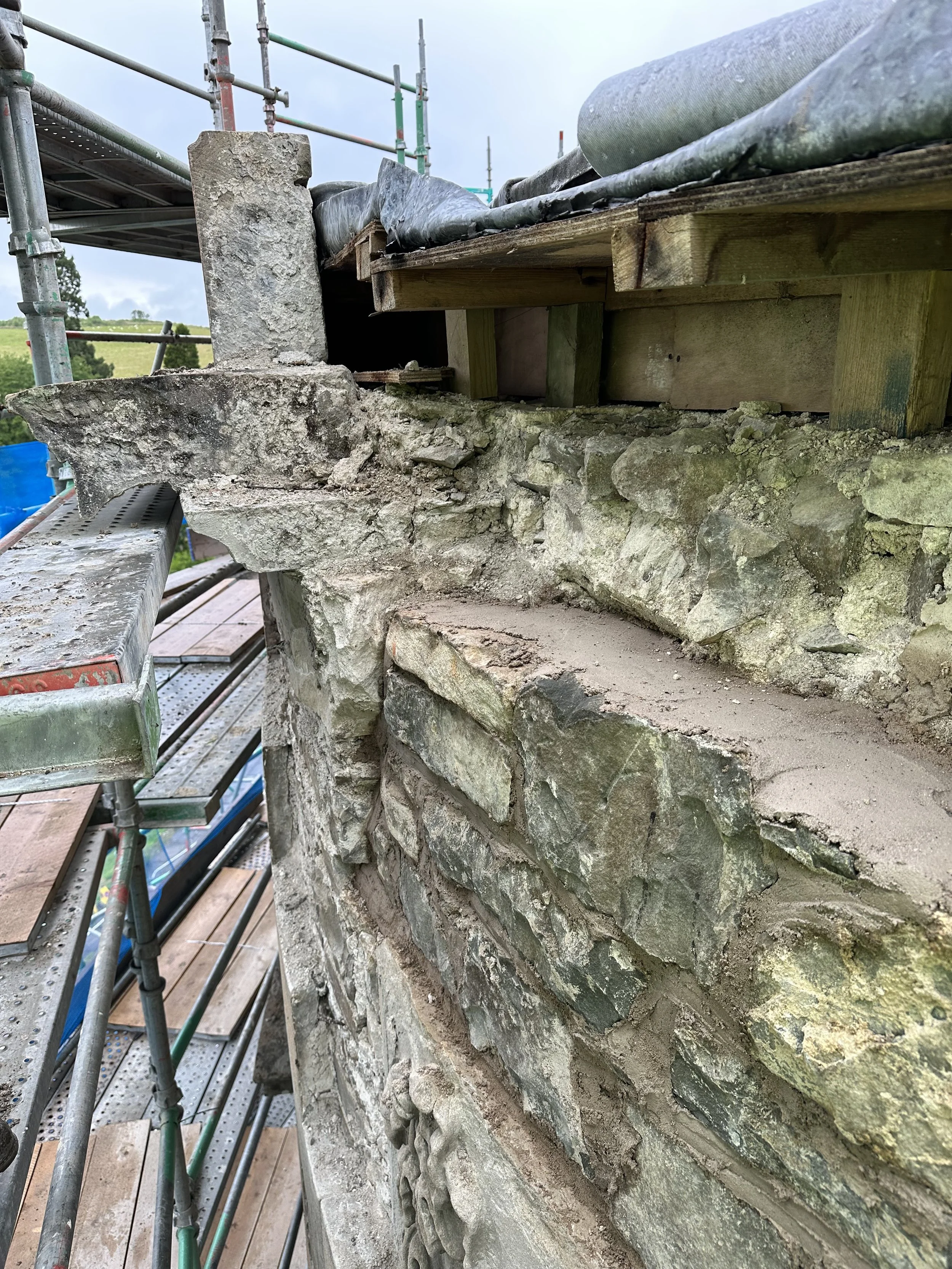
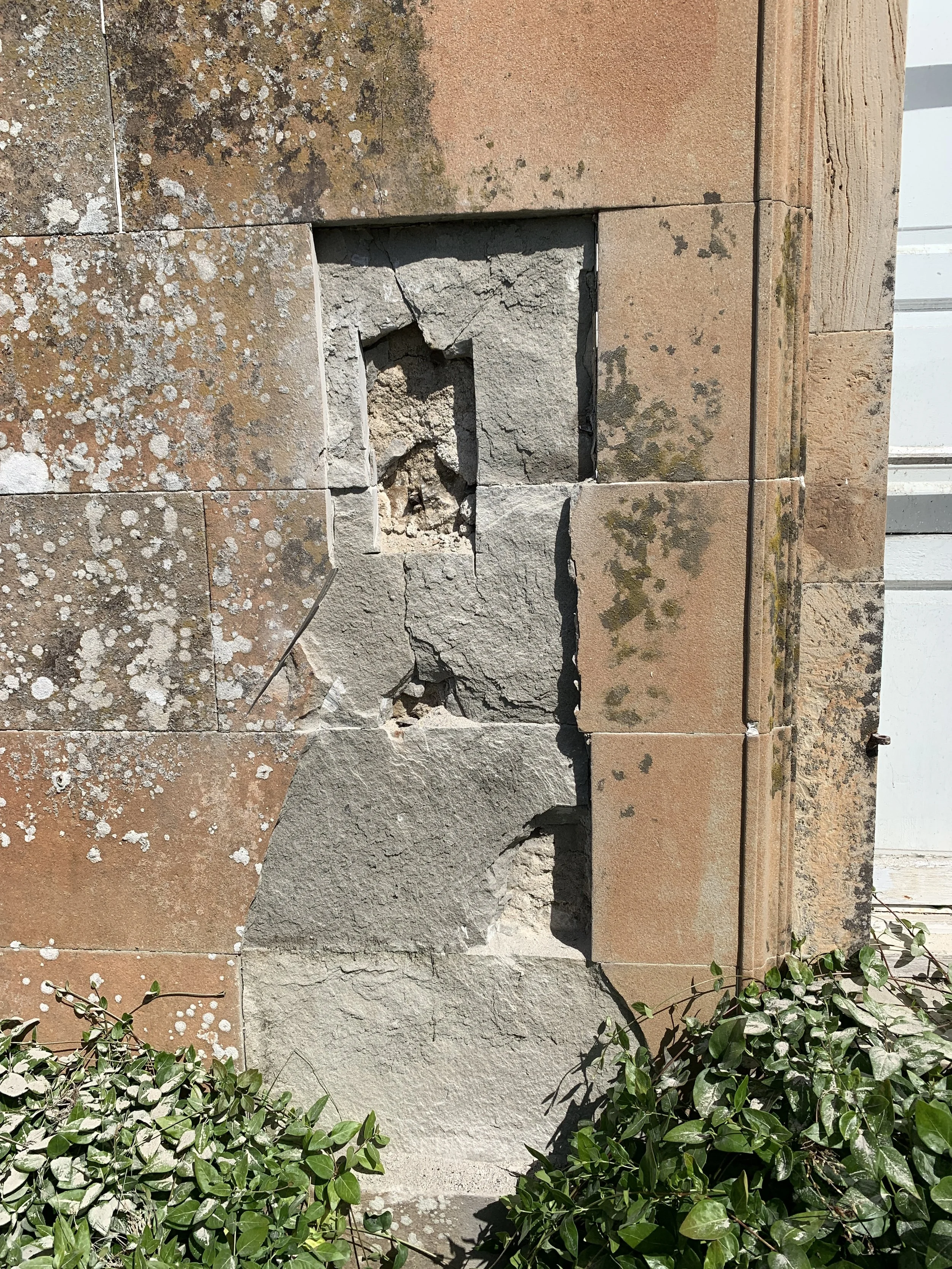
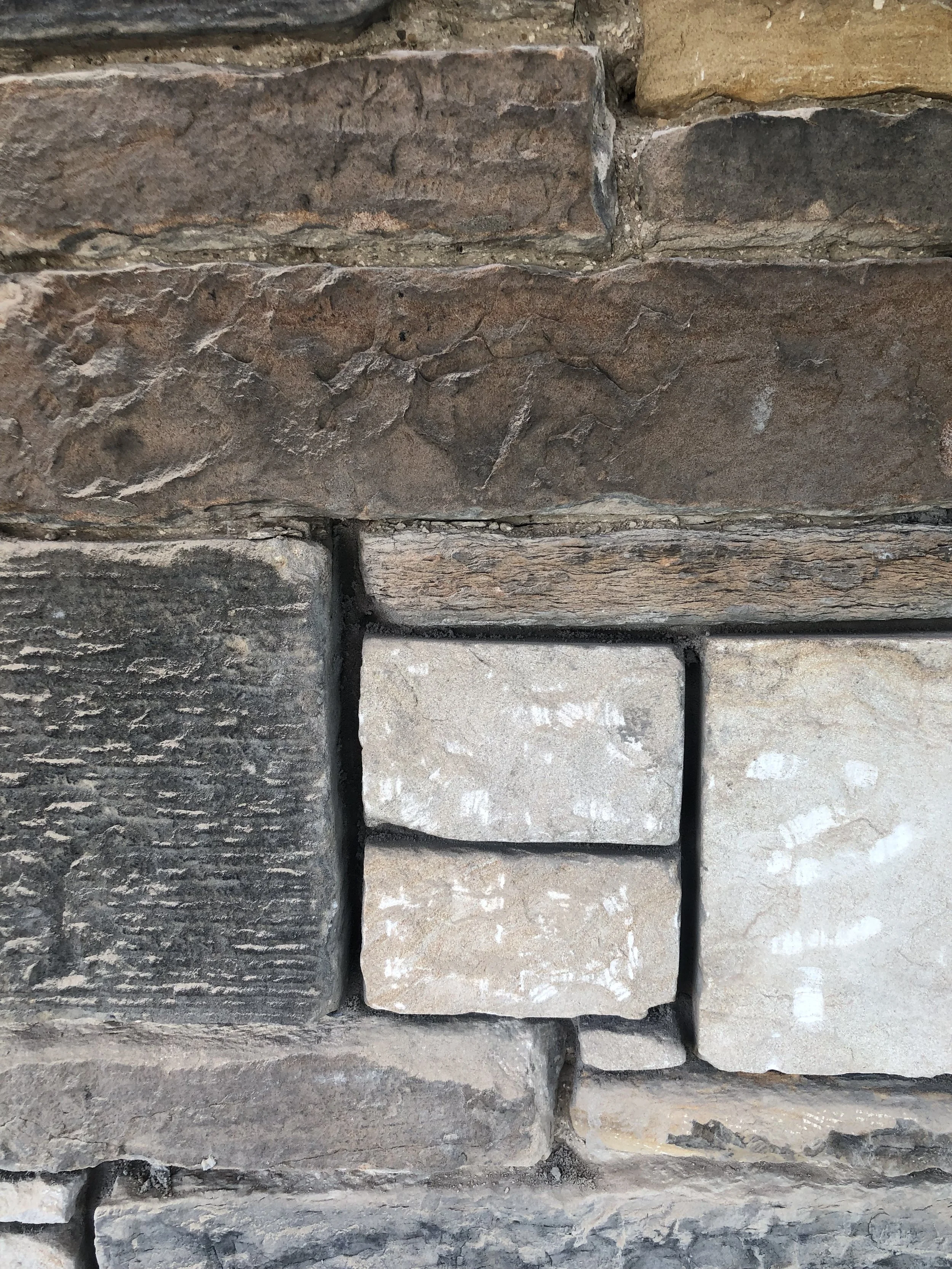
From Assessment to Strategy
A visual survey is always our starting point, but tactile assessment is equally important. Tapping the stone with a stonemason’s chisel helps us understand the depth of a fracture or the extent of delamination and listening to a stonemasons assessment of the issues. Sometimes the solution is minimal: removing loose material and allowing the exposed surface to harden naturally. We work with stonemasons, structural engineers, or quarry specialists to design a more robust intervention.
Material selection is strategic. Harder, less porous stones are often best at exposed locations e.g ground level, where splashback and salt exposure are most aggressive or at high level on sloping surfaces designed to shed water.
Tools of the Trade
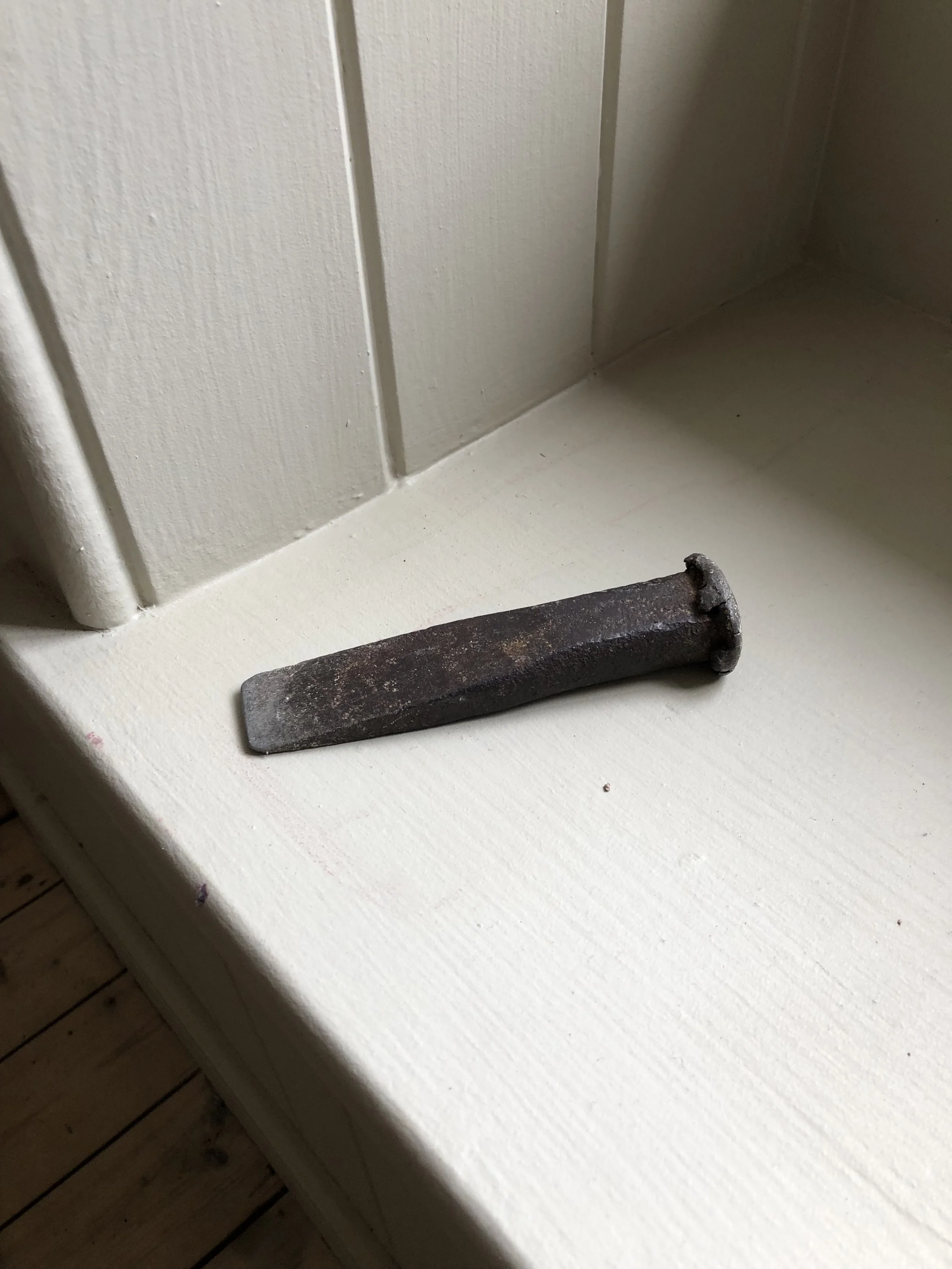
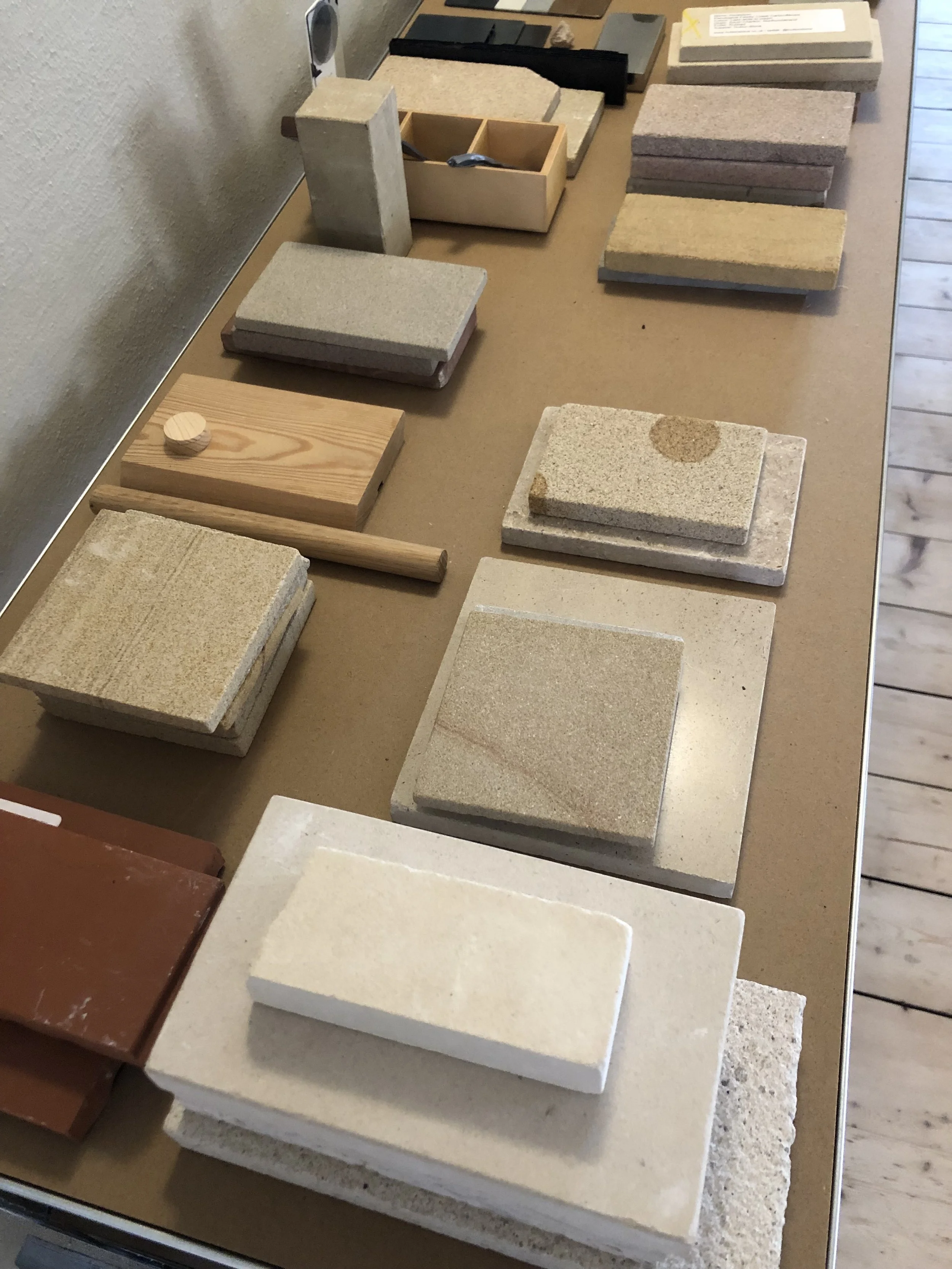
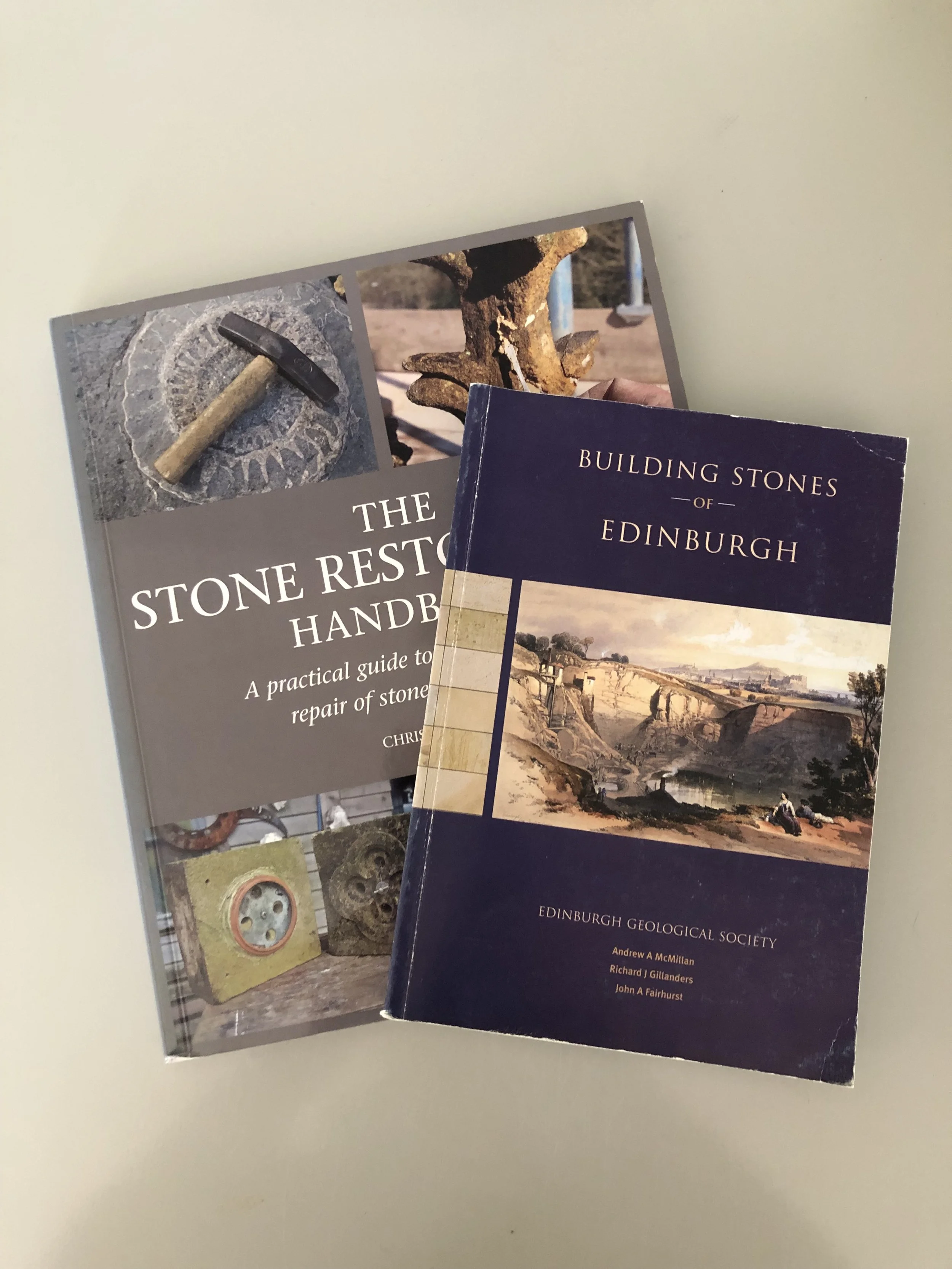
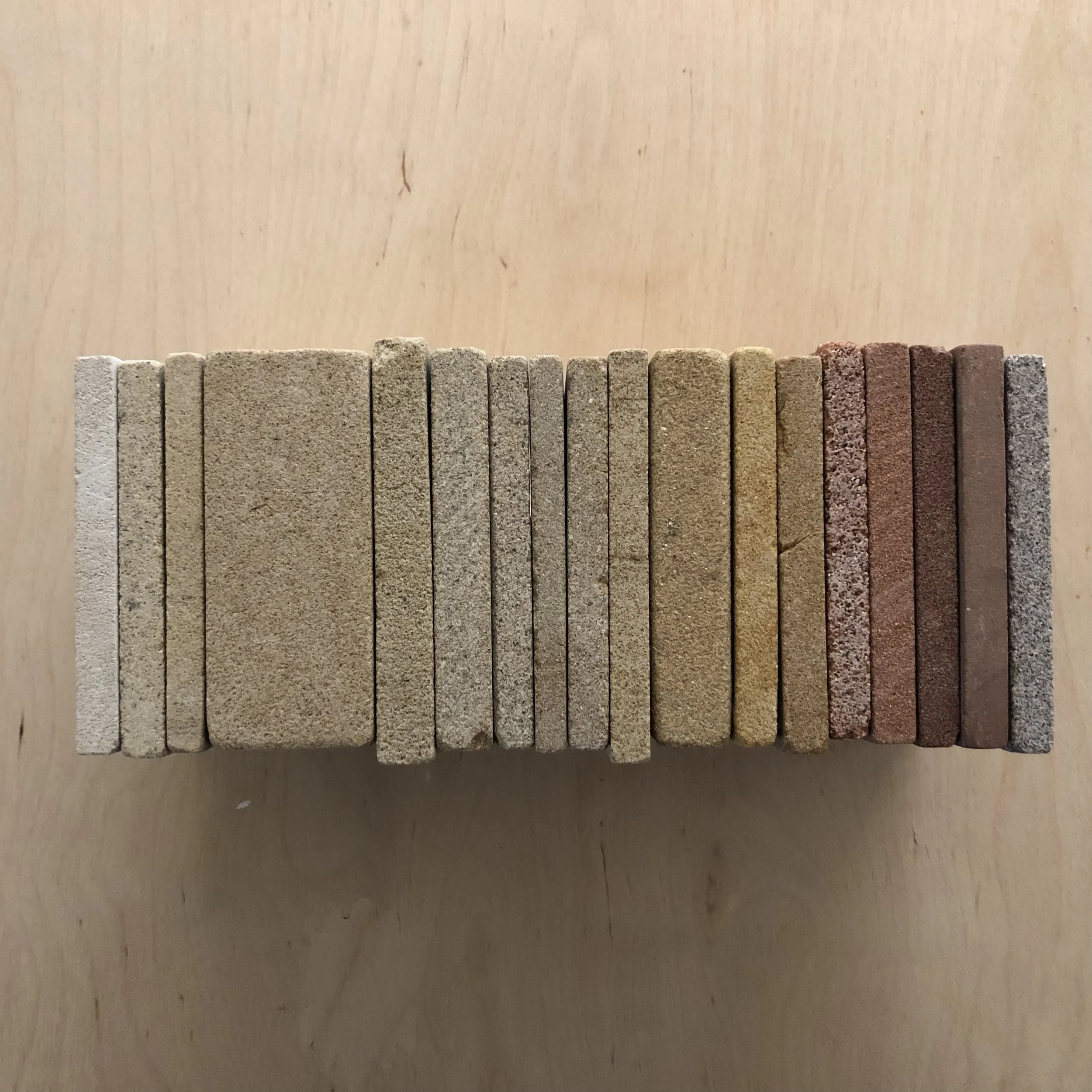
Our most trusted tool is the stonemason’s chisel — simple, precise, and honest. Alongside it, we’re continually developing our stone library: a growing catalogue of samples organised by colour, porosity, grain, and geological origin. It allows us to match repairs with confidence, ensuring that every intervention is technically sound, visually coherent, and true to the building’s character.
The Future of Stone in Construction
As the industry searches for low‑carbon, locally sourced materials, stone is re‑emerging as a compelling alternative to concrete. In our South Edinburgh Villa project, we explored the use of stone bricks for a new extension, applying conservation knowledge to a contemporary context. By working with texture, proportion, and subtle contrast, we created a dialogue between old and new that honours the existing building while expressing the present. Link here.
Stone connects past, present, and future. Caring for it well means understanding not just how it fails, but how it endures — and how it can continue to shape sustainable architecture for generations to come.
To read more about our Conservation services please click here.
Do you have a historic building that needs repaired? Get in touch here or below to find out how we can help.