South Edinburgh Villa
Refurbishment and extension
Private
South Edinburgh
Residential \ Heritage
Service
Client
Location
Project Background
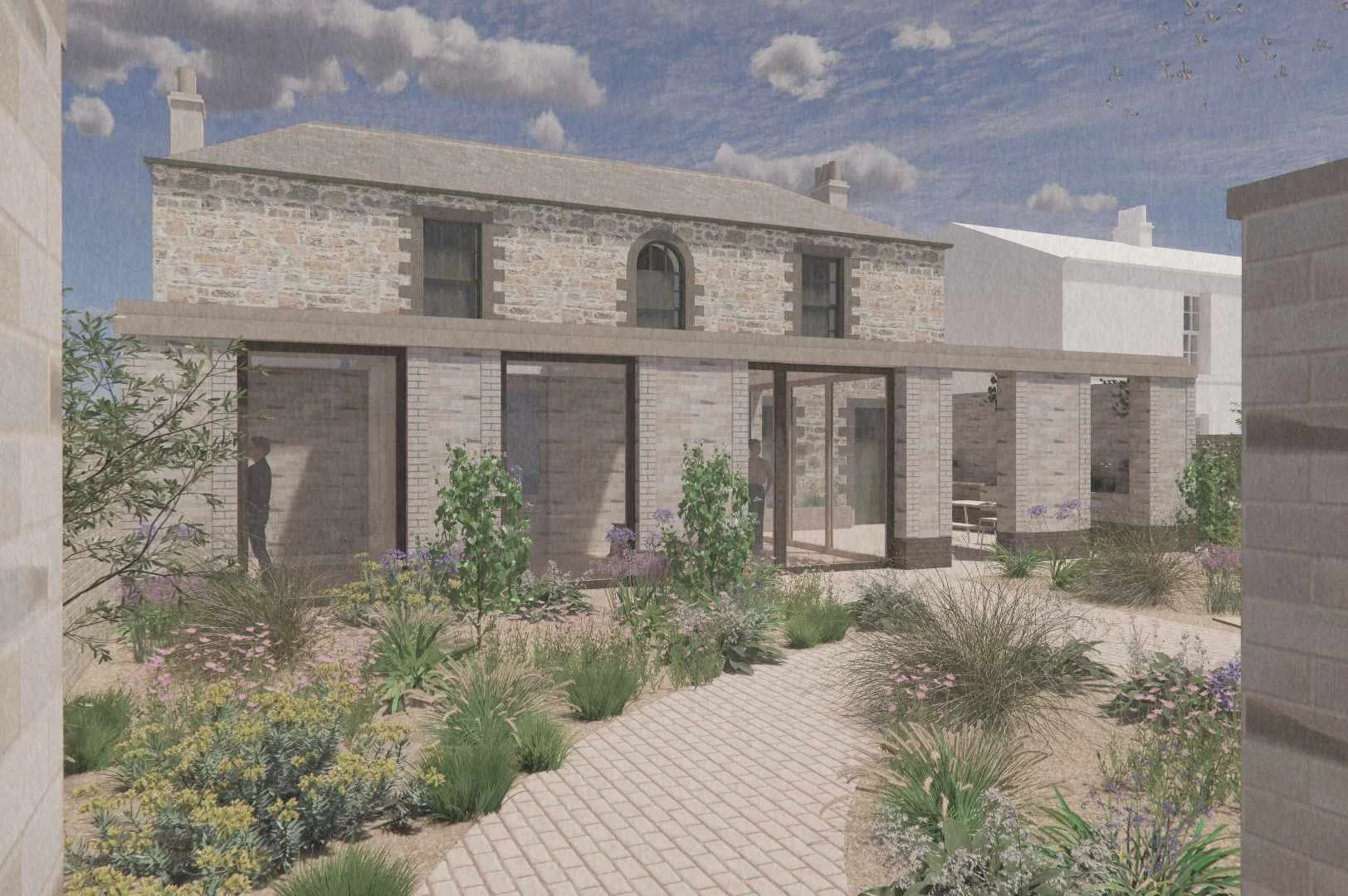
The building is a handsome three bay, 19th Century sandstone villa in south Edinburgh.
The house had been reshaped many times before and its plan gradually lost the clarity and adaptability our client needed.
Our client’s vision
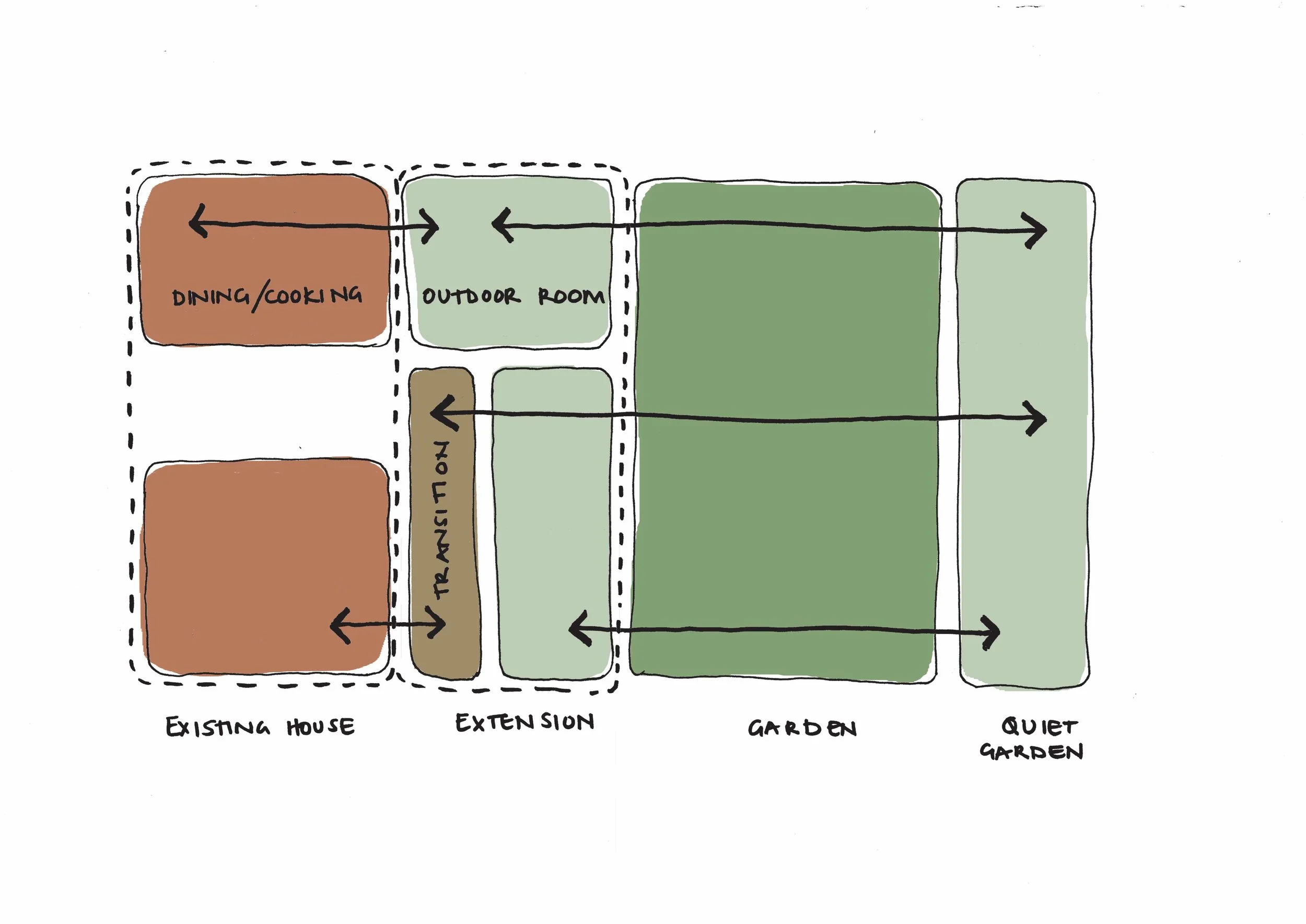
The owners were looking for a home that could open up to the garden, support moments of retreat, and expand effortlessly when friends gathered.
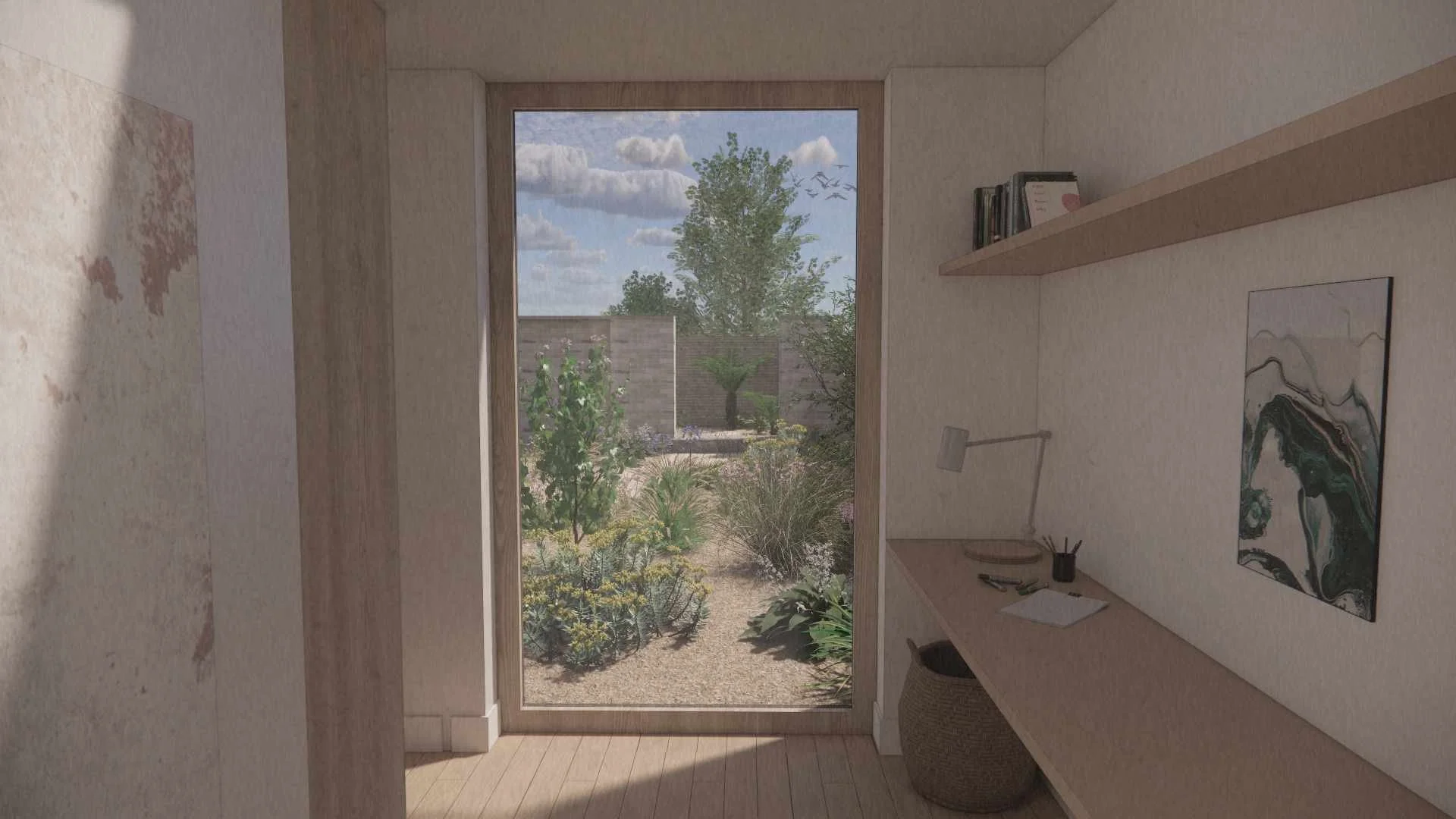
They wanted a garden room that could hold a small studio and a snug, a place for making, resting, and reconnecting. A home where the indoor and outdoor spaces work together, not as separate zones but as a single, flexible landscape of living.
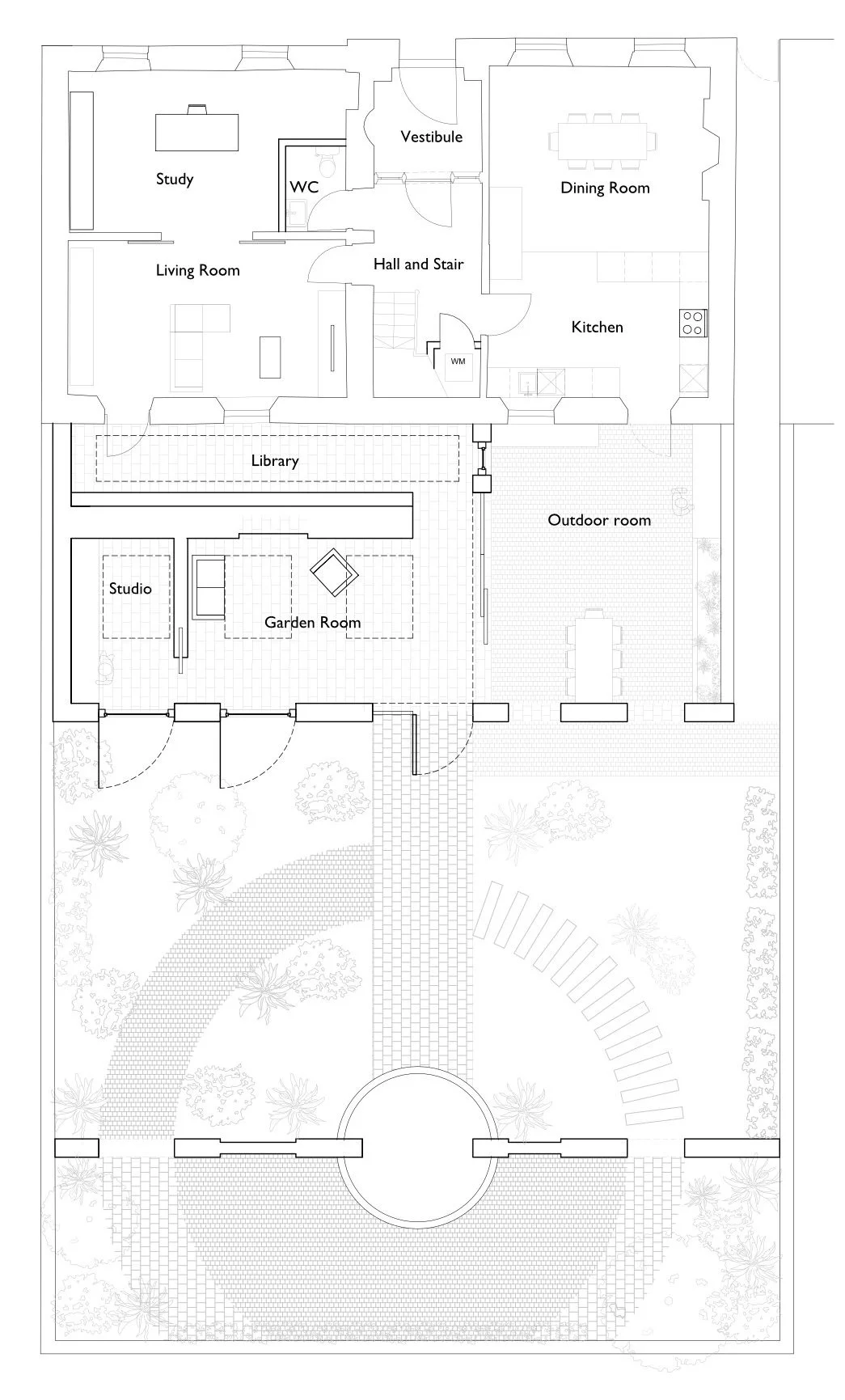
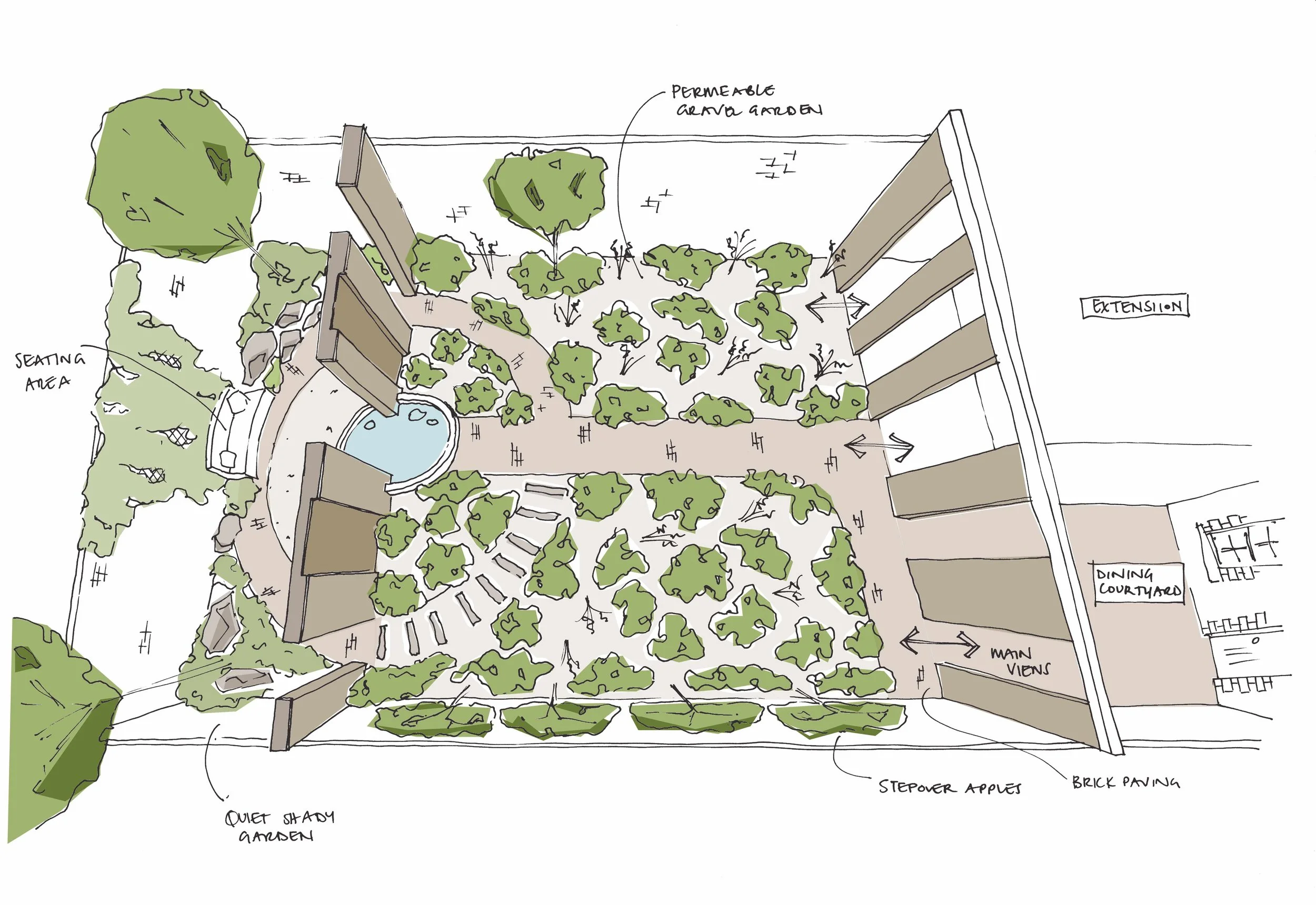
We began with the new garden room, carefully considering its position and the views it would frame. This led to a design defined by two walls: one separating the garden room from the main garden, and another creating a smaller, more secluded garden at the rear of the site. Each wall was shaped with corresponding openings, aligning to frame key features and create a series of connected, intentional views.
Our approach
This project became a clear expression of our approach: beginning with the whole site, understanding the wider spatial relationships, and designing connections that feel natural, intuitive, and quietly generous.
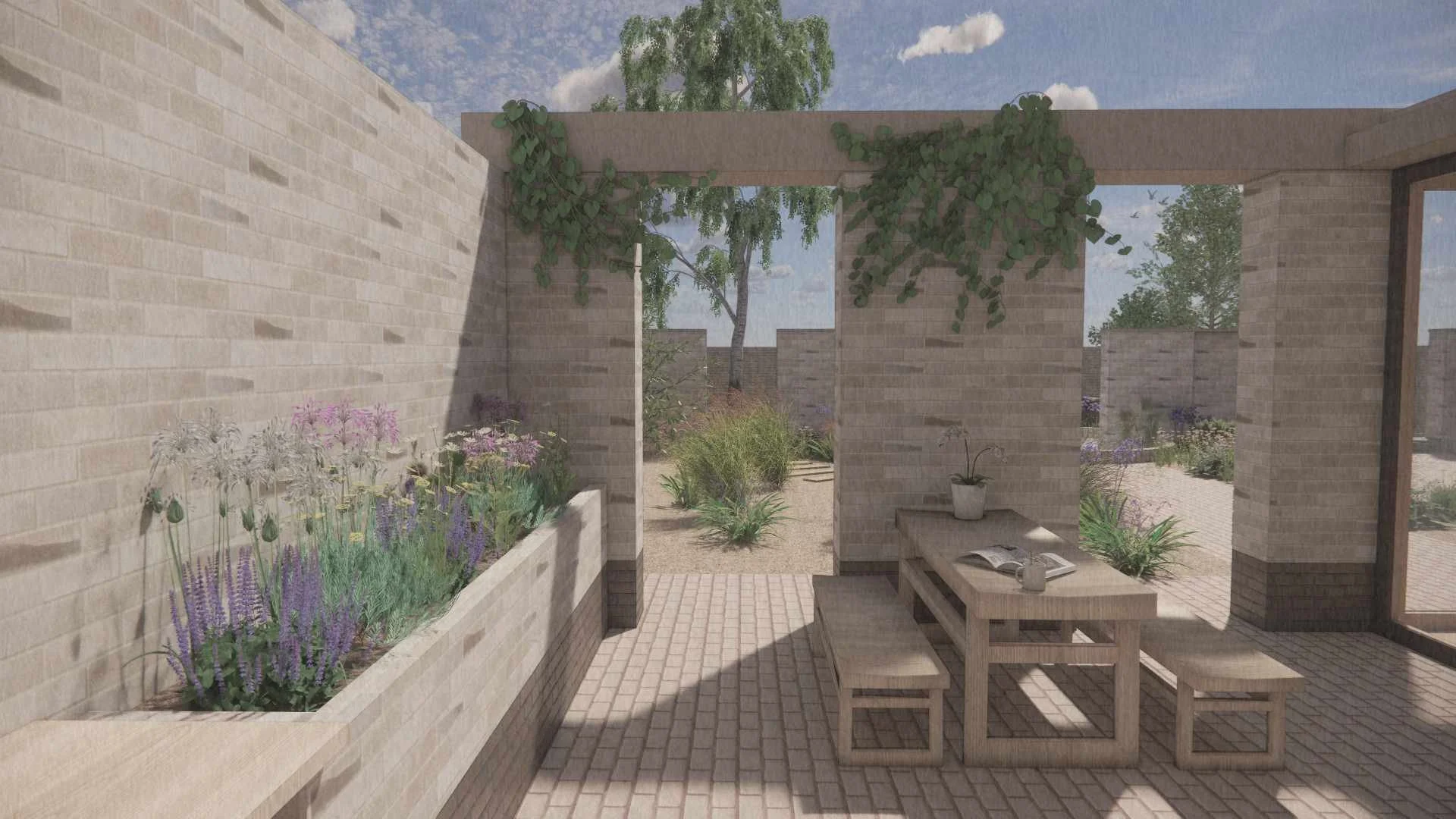
We used the full width of the garden to create a sequence of rooms — a private studio, a cosy snug, and an outdoor room for entertaining. Each space is distinct, yet they read as one continuous gesture, extending the home’s usable space beyond its walls.
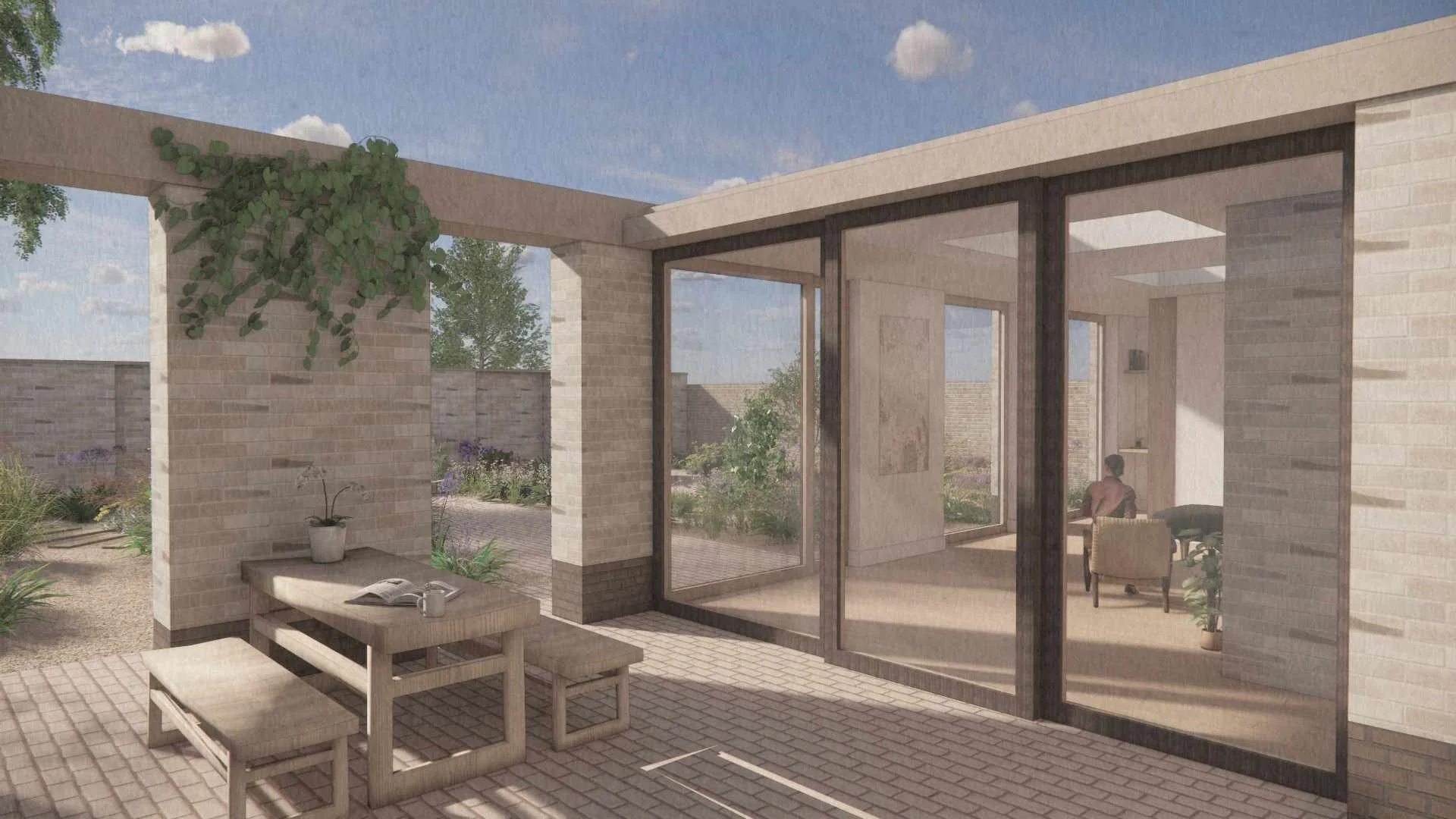
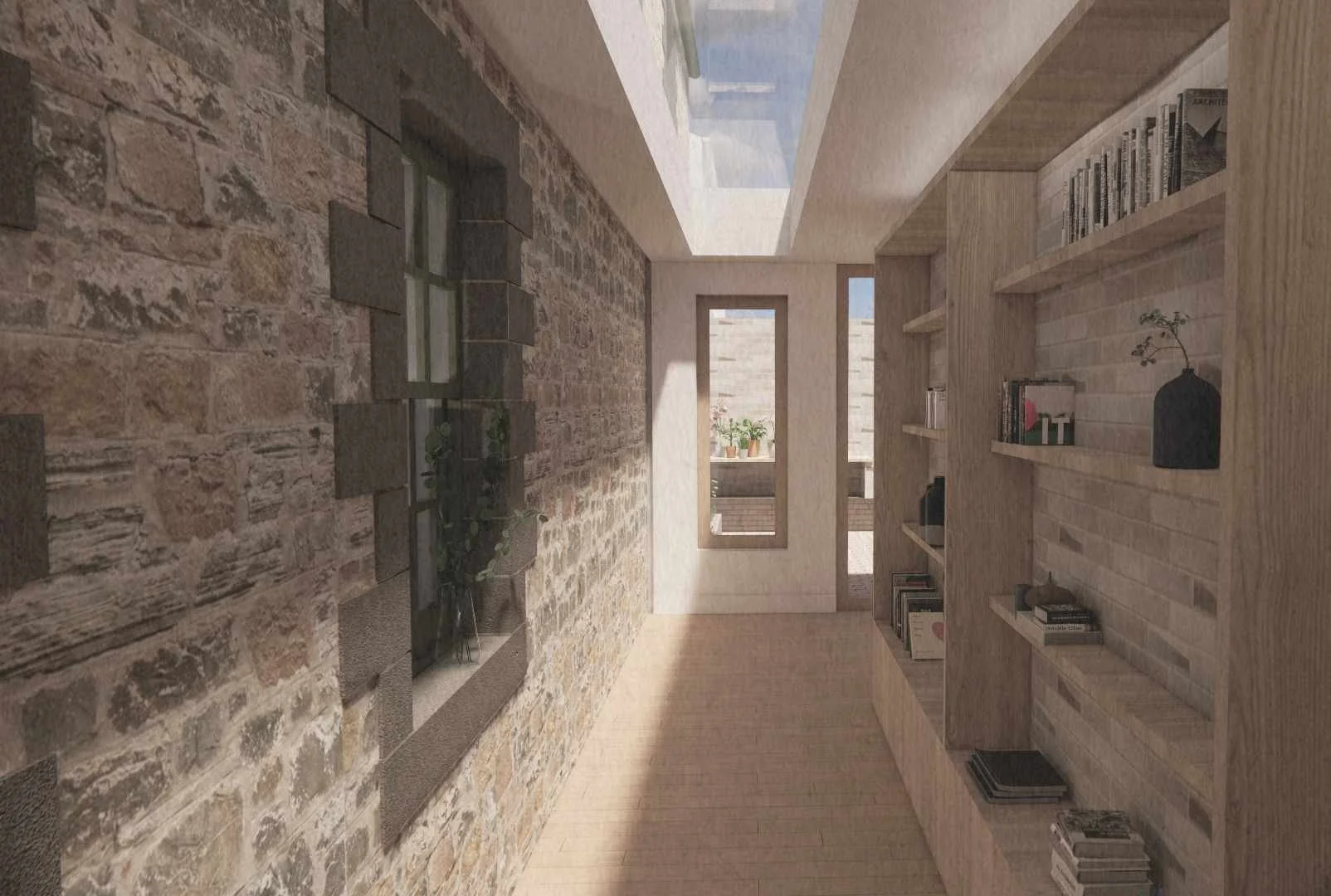
A thick thermal-mass wall anchors the new addition. It absorbs warmth from the sun during the day and releases it slowly into the evening, supporting comfort with minimal energy use. Carved into its depth is a reading nook and shelving, turning the wall into an inhabited threshold between the existing house and the new garden rooms.
The outdoor room is generous and purposeful: space for dining, informal bench seating, an outdoor worktop, and a raised herb bed. It sits directly off the kitchen, creating a practical, adaptable extension of everyday life into the garden.
Conservation and sustainability
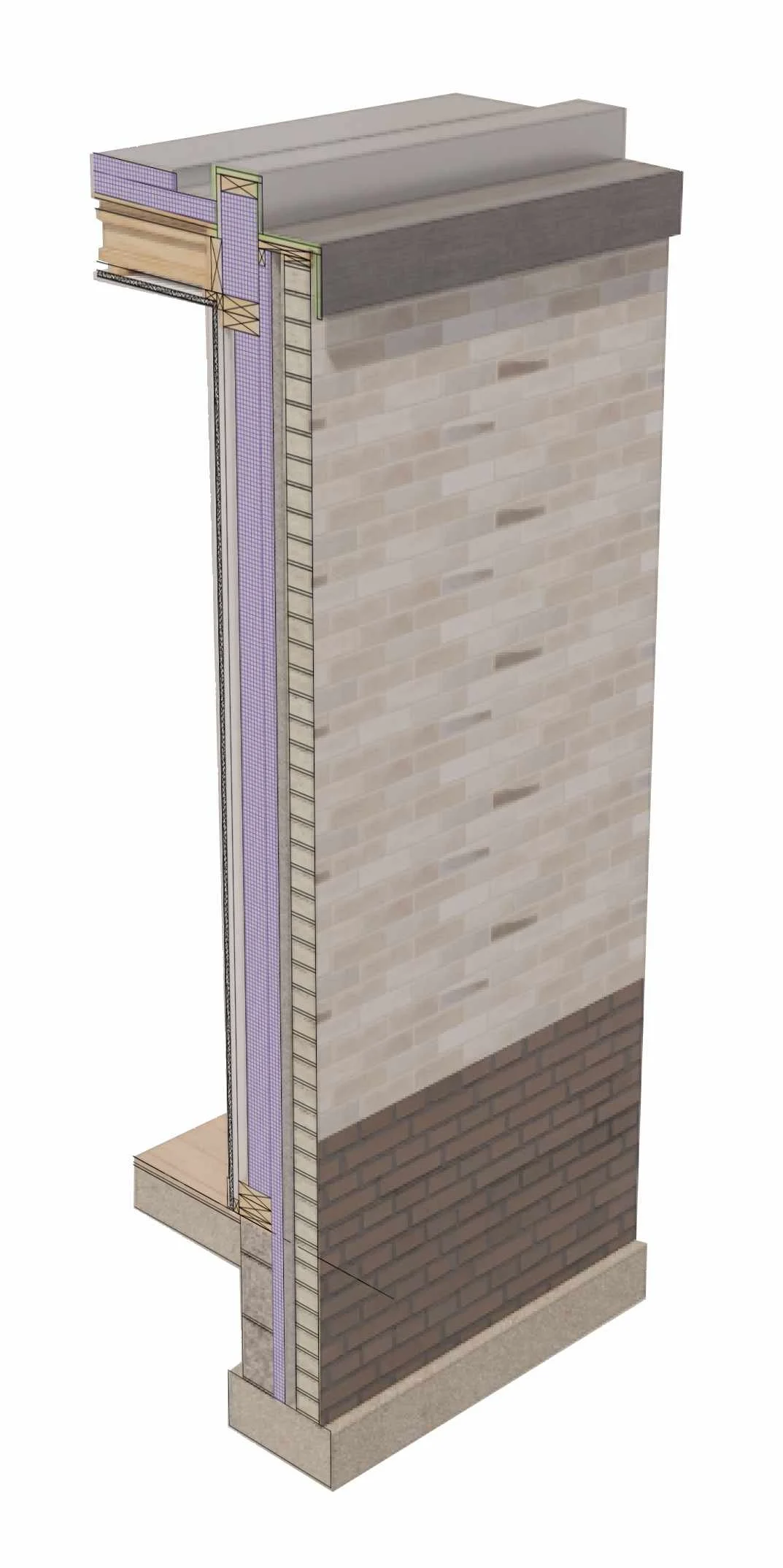
In the construction of the new garden rooms, we were committed to using low‑impact materials while ensuring a robust external skin that could stand up to weather and the everyday realities of family life. Stone bricks became the natural choice: as a cut product, they carry a significantly lower environmental impact than fired clay bricks, yet offer far greater strength. They can also be produced from pieces of stone too small for traditional masonry, making fuller use of the quarried material.
The structure of the building is a timber frame, steel has been designed out where possible and a limecrete floor is proposed to the extension.
The result
Drawing on our long experience working with stone, we detailed the brickwork as an element designed to weather with intention. Over time, it will develop a soft patina that deepens the character of the façade. At the corners, the bricks have a droved texture, giving them a rougher surface that will catch particles and gradually darken, subtly emphasising the vertical rhythm of the elevation.
Internally the material palette is subtle, the texture and colours of the planting are framed by the openings and becoming the focal points leading you through the spaces.
Visit our services page to find out how we can help you with your project here.
-
![Modern stone extension to a traditional listed villa in Edinburgh. Works included fabric repairs and stone repairs to the original house and sustainable upgrades to the whole property.]()
View from courtyard
-
![Modern stone extension to a traditional listed villa in Edinburgh. Works included fabric repairs and stone repairs to the original house and sustainable upgrades to the whole property.]()
View from studio
-
![Modern stone extension to a traditional listed villa in Edinburgh. Works included fabric repairs and stone repairs to the original house and sustainable upgrades to the whole property.]()
Proposed Ground Floor
-
![Modern stone extension to a traditional listed villa in Edinburgh. Works included fabric repairs and stone repairs to the original house and sustainable upgrades to the whole property.]()
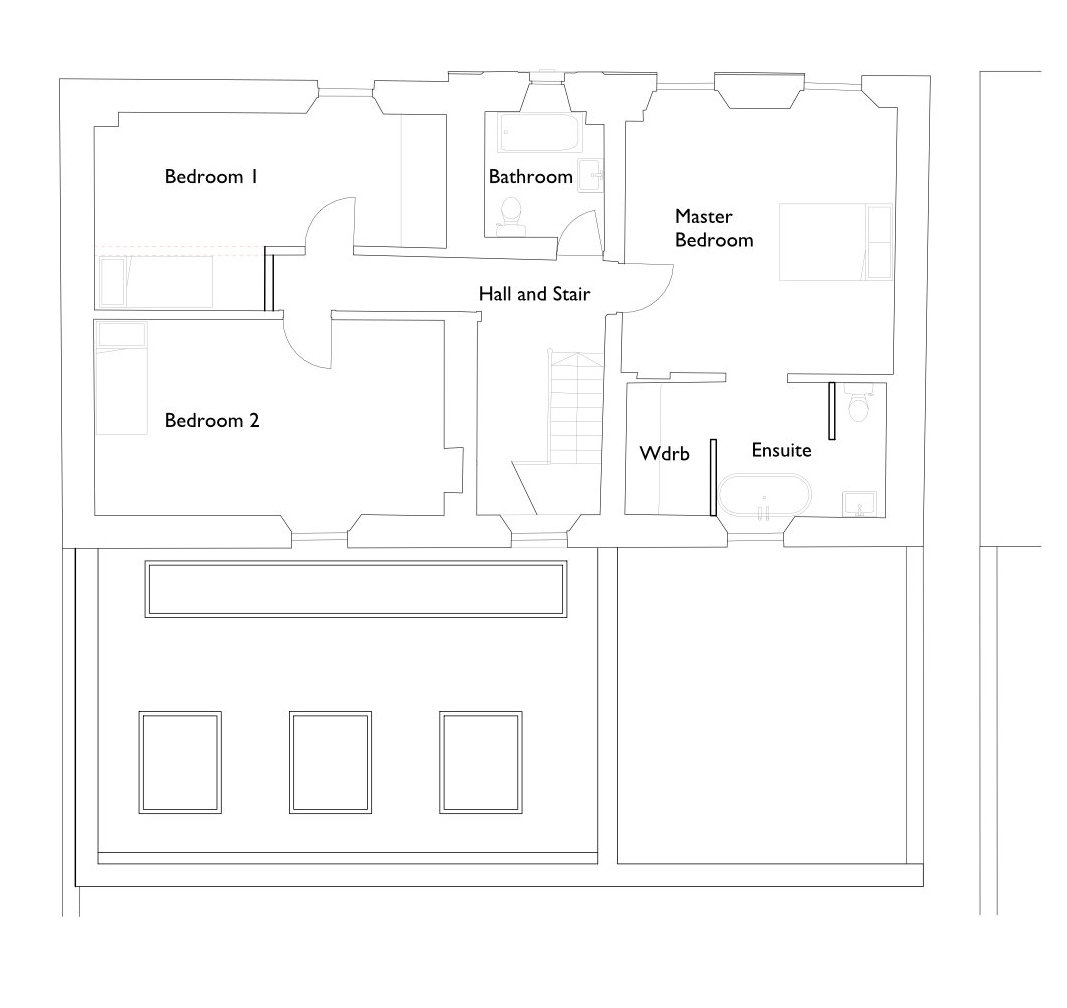
Proposed First Floor