How to improve energy performance in historic homes?
A question that many of our clients approach us with - how to improve the thermal comfort of their historic home and reduce their bills.
Many of our clients come to us asking how they can improve the thermal comfort of their historic home while reducing energy bills. Older buildings behave very differently from modern ones, so improving performance requires a careful, fabric‑first approach that respects the building’s character and avoids unintended consequences.
There is no single solution that suits every property, but there are several key areas we assess when advising on energy upgrades for traditional and listed buildings.
Understanding How Historic Buildings Behave
Before making any changes, it’s important to understand how older buildings work. Most historic homes are built with solid walls, breathable materials, and natural ventilation pathways. They manage moisture differently from modern, airtight construction.
This means that:
Upgrades must allow the building to breathe;
Moisture movement must be carefully managed;
Interventions should be reversible where possible;
A whole‑building approach is essential.
There are many ways to improve energy performance in historic homes and the most appropriate method will depend on each individual property but there are typically several areas that we initially consider:
Windows and doors:
Are windows double glazed and are there draught strips installed? Do the doors close properly? Traditional timber windows can be refurbished and slim double glazing and draught strips added with minimal aesthetic change to your home. This is also now widely accepted by planning authorities as a necessary upgrade to historic properties however may require a listed building consent depending on the property.
Attic insulation
One of the major areas of heat loss in a building is through the roof - roughly 25% of all heat losses in total. We look at the condition of the roof and the opportunities for insulating either to the underside of the roof or at attic level. Roof insulation is often low-risk from a planning perspective and offers and excellent return on investment.
External wall insulation
The application of insulation internally or externally will largely depend on the space available and whether your property is listed (among other factors). We can assess the building and advise what upgrades are possible and what planning and listed building consents are required in order to achieve them.
Under-floor insulation
Typically there are voids below floorboards at ground floor level in historic buildings that are unheated and open to the external air. Installing insulation below your floorboards will reduce heat loss though your floor but more importantly draughts which can be significant depending on the condition of the floorboards. This can be quite an intrusive upgrade but one with low planning risk.
Airtightness
Making your building more airtight is one of the most cost-effective methods of improving thermal comfort. Areas for improving the airtightness of the building include:
~Sealing gaps around skirtings and between floorboards;
~Draught‑proofing loft hatches;
~Sealing unused chimneys (with appropriate ventilation);
~Addressing gaps around service penetrations.
Airtightness must always be paired with appropriate ventilation to avoid moisture issues.
Ventilation
As insulation and airtightness improve, ventilation becomes even more important. In order to prevent moisture build-up ventilation measures that should be considered include retaining or improving passive ventilation, installing mechanical ventilation (with heat recovery where appropriate) and ensuring moisture‑producing rooms (kitchens, bathrooms) are well‑ventilated. Good ventilation protects both the building fabric and the health of its occupants.
Heating Systems and Controls
Upgrading the heating system can further improve efficiency. Low-temperature heating systems, renewable heat sources (where appropriate), smart thermostats and zoning and programmable TRVs can offer quick and cost-effective improvements without major alterations.
Appliances
Upgrade to low-energy appliances. If you’re in the UK, look for appliances with the A+++ rating, this indicates the highest energy efficiency. Switching to these energy-efficient appliances will reduce your homes energy consumption and in turn, help you save on electricity bills. This is a change that you can make without specialist advice and will have an instant impact.
Lighting
LED bulbs use up to 80% less energy than traditional incandescent bulbs and last significantly longer. Replacing all your lights with LEDs is one of the easiest and most effective way to lower your energy consumption and reduce your carbon footprint. Maximising natural light reduces the need for artificial lighting, opening your curtains during the day or even considering installing skylights will brighten your home naturally. Again this is an easy change that will instantly have an impact on your bills.
Behavioural Changes
Not every improvement requires construction work — some of the quickest wins come from simple, low‑ or no‑cost habit changes. Lowering the flow temperature of your heating system, closing shutters at night, using heavier curtains, and managing ventilation more intentionally can all make a noticeable difference to thermal comfort. These small adjustments are easy to adopt and quickly become second nature in the way you use your home.
Maintenance
A wet wall performs 30% worse than a dry wall. Keeping your gutters clear prevents them from blocking and causing the water to soak the wall below. There are a number of low-cost maintenance items that will prevent high-cost issues further down the line.
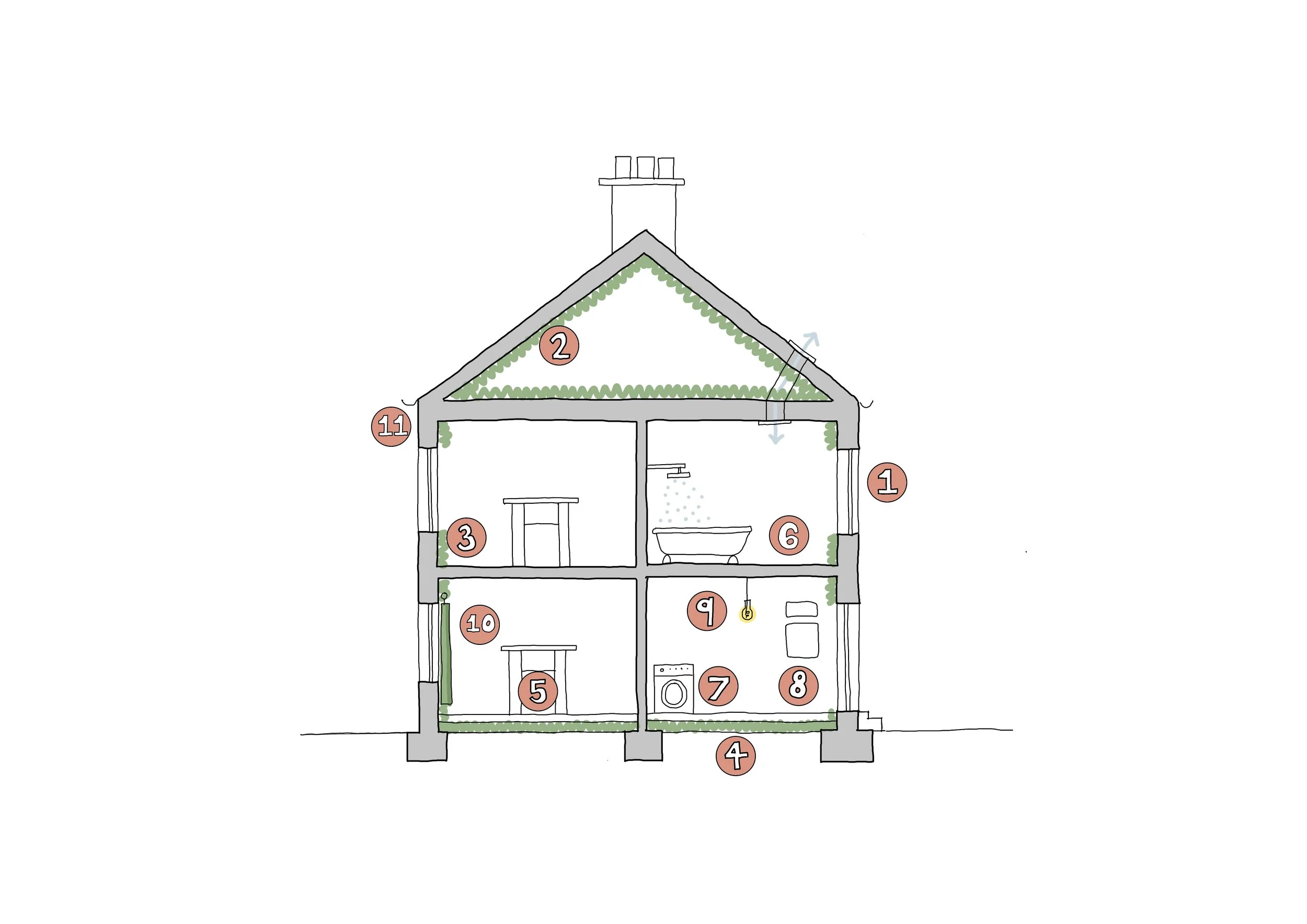
Fabric upgrades to historic buildings
For many historic homes, especially listed buildings, certain upgrades require consent. We help clients understand what requires permission, what can be done without consent and how to balance energy performance with heritage value.
Improving the energy performance of a historic home is entirely achievable — it simply requires a thoughtful, fabric‑first approach that respects the building’s character. By understanding how traditional buildings work and choosing appropriate interventions, you can significantly improve comfort, reduce energy use, and protect your home for the long term.
If you’re considering upgrades, we can help assess your property, identify the most effective measures, and guide you through the regulatory process with clarity and confidence.
Find a list of our services here or get in touch below.