Trinity Villa Flat
Sustainable Upgrade, Fabric Repairs
Private
Trinity, North Edinburgh
Residential
Service
Client Location
Improving flexibility in a 19th century home
Take a step inside
A Category B listed property, this flat In Trinity, Edinburgh was originally built in the 1860s by a Leith merchant but had undergone numerous transformations over its lifetime.
-
The house was doubled in plan and a tower added around the turn of the century, before being subdivided into four flats in the 1930s.
As a result, many incremental alterations made prior to listing created a dark, awkward and inefficient internal layout, which compromised the overall spatial quality.
-
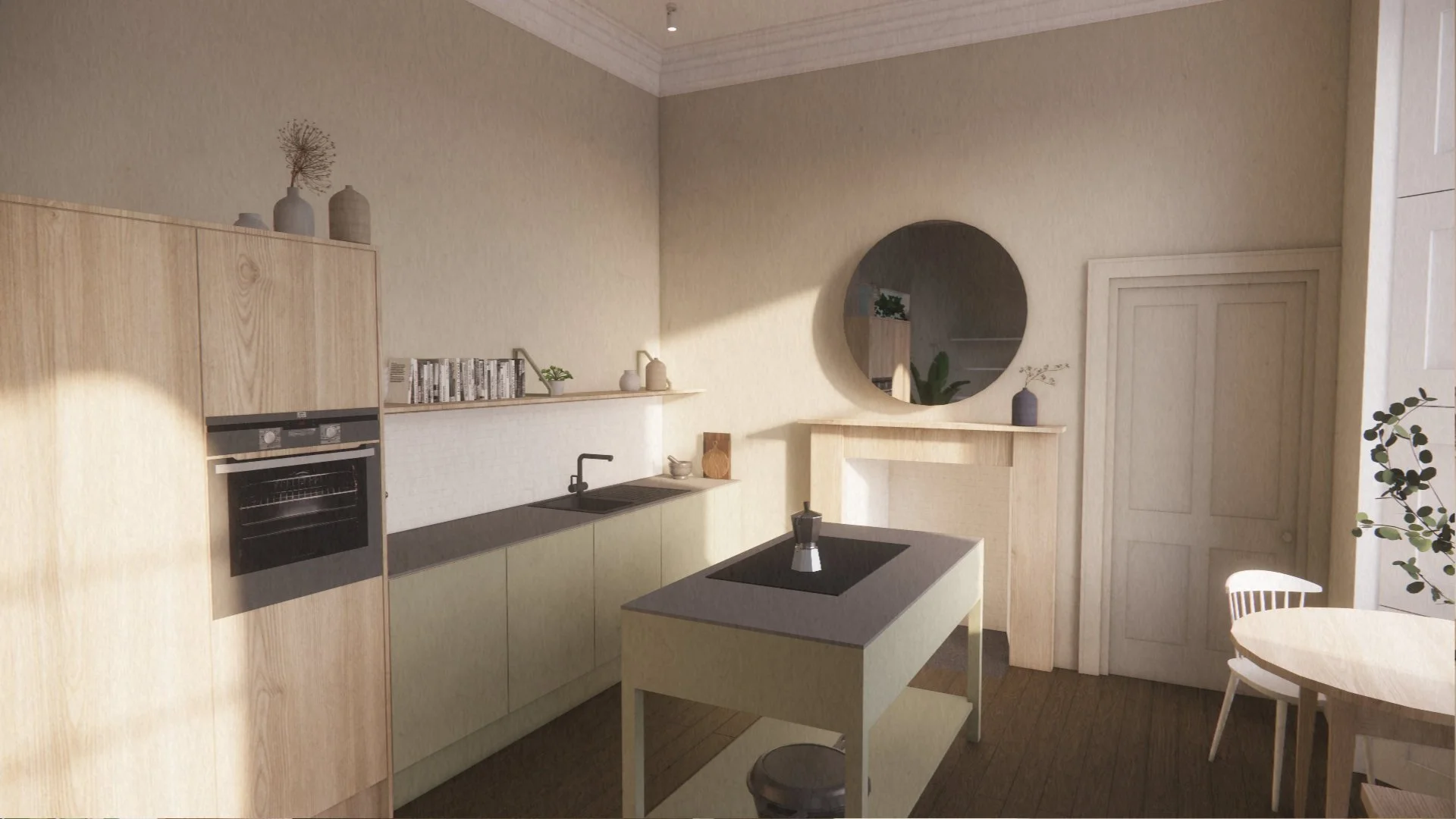
On the principal level, the flat featured an awkwardly shaped kitchen that left the adjoining hallway dark and underused.
At attic level, a partial conversion had been undertaken, but lacked insulation and suffered from failing windows, reducing comfort and energy efficiency.Our client wanted a warmer, more energy efficient space, with increased natural light and more welcoming areas for socialising.
-
Reconfiguring the kitchen and principal level
Working closely with our client to understand their specific needs, we created a proposal which focused on improving usability and daylight flow. We suggested:
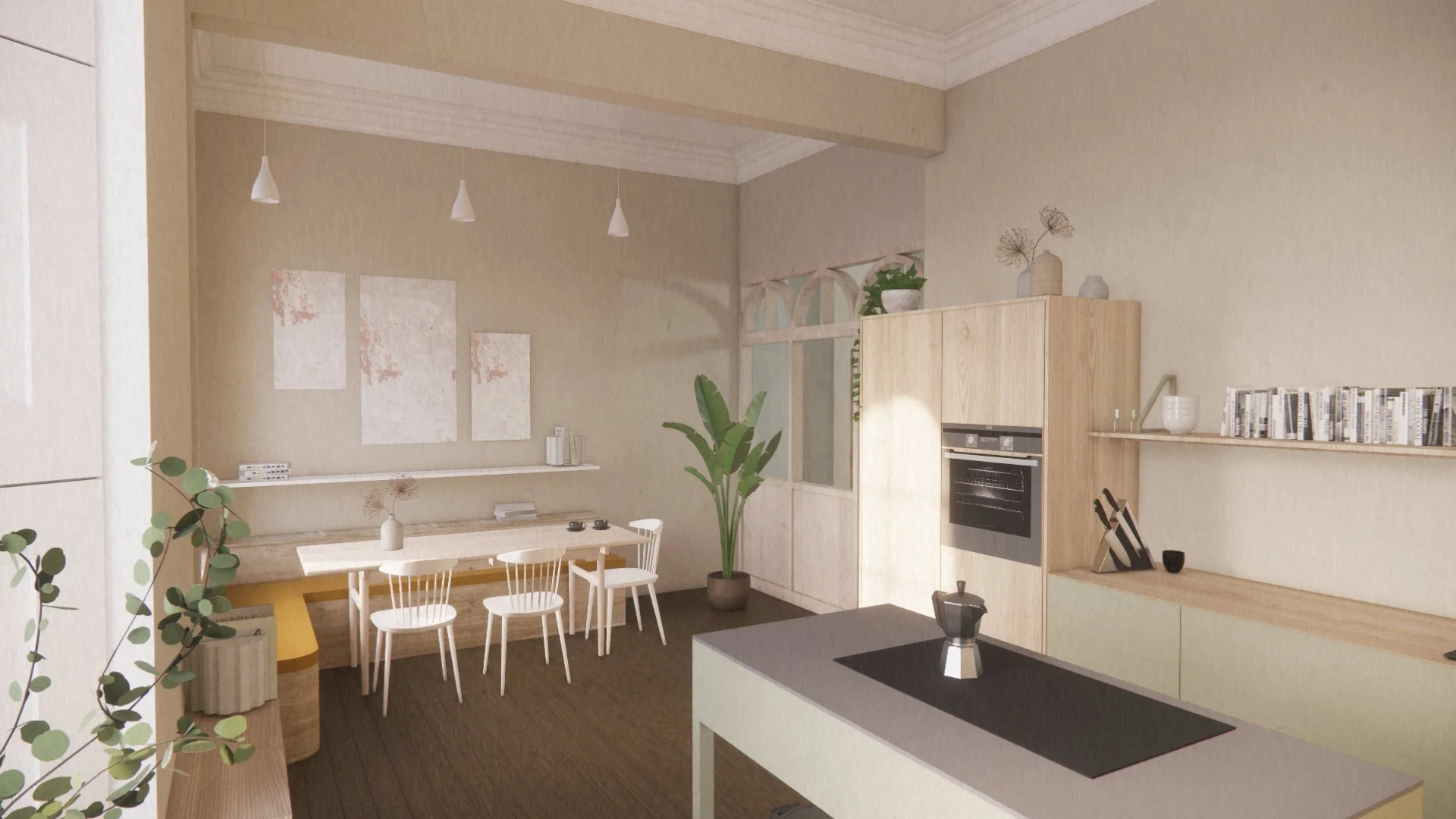
Opening the wall between the kitchen and dining room to create a larger, more functional space
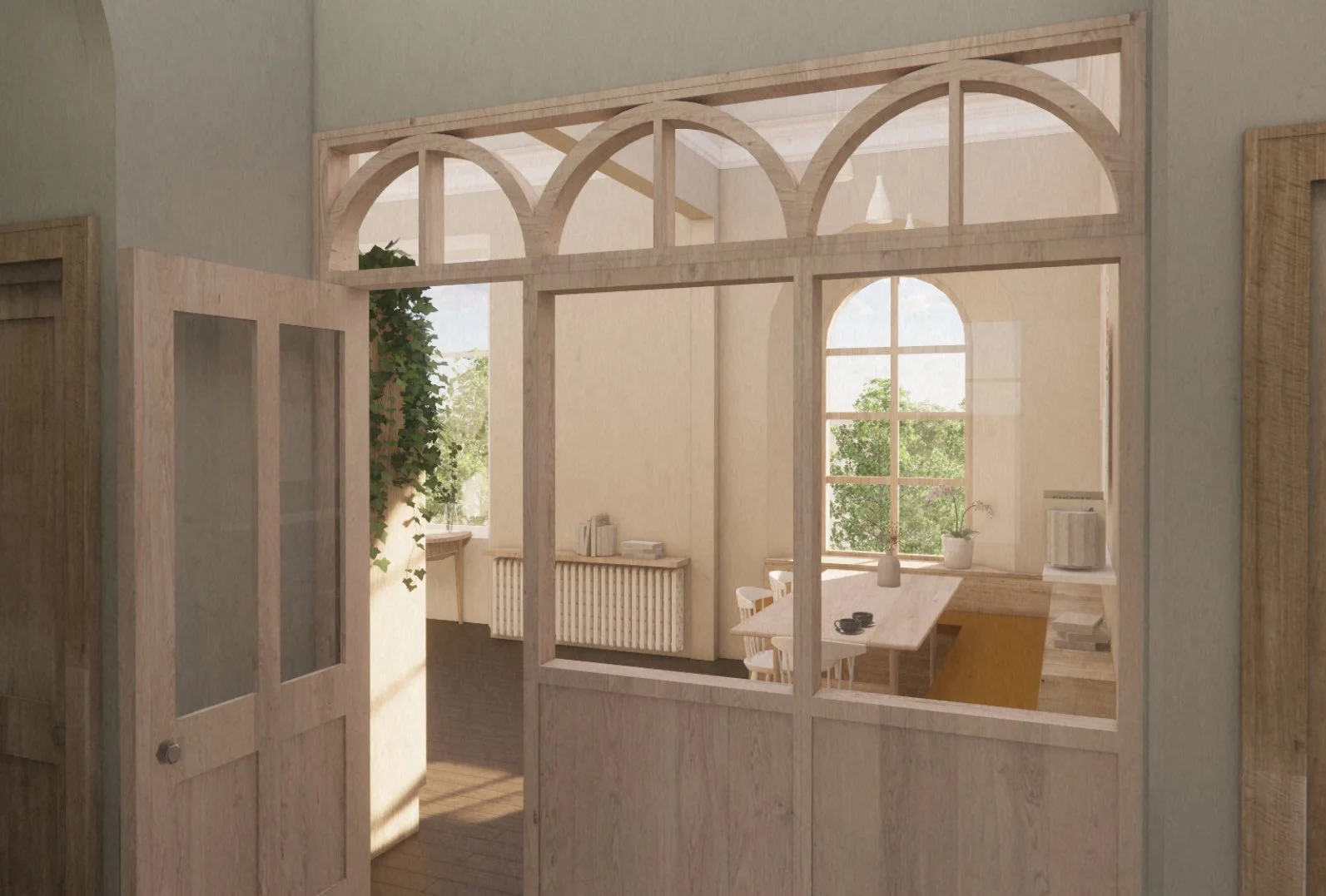
Adding a glazed screen between the kitchen and the hallway to allow natural light to travel deeper into the plan, improving brightness and spatial connection.
Attic-Level Improvements
Due to poor roof insulation and awkward layout, the space wasn’t as warm or functional as it could be. To address these concerns, we proposed enhancements to the attic level including:
Full roof insulation to improve energy performance and thermal comfort
Providing an additional WC and new living space in the reconfigured layout to make better use of the upper floor.
-
Window restoration and energy upgrades
The building’s traditional sash-and-case windows required significant renovation, so as part of a holistic energy reduction strategy, we proposed:
Refurbishment of existing frames
Installation of draught seals
Introduction of slim-profile double glazing throughout
These measures improved thermal performance while respecting the historic fabric of the building. The strategy also prepares the property for future heating-system upgrades as part of broader carbon reduction initiatives.
-
The redesign has transformed the space into a brighter, warmer and more efficient home while remaining sensitive to its historic character. Opening up key spaces and adding a glazed screen allows natural light to travel through the plan, we brought to life our client’s vision of a welcoming kitchen, dining area and hallway connection.
The reconfigured attic level now provides comfortable, functional rooms year-round, with improved insulation and a more considered layout that offers greater flexibility for everyday living.
Renovated sash-and-case windows, draught sealing and slim-profile double glazing significantly enhance thermal performance without compromising the building’s history and value.
These upgrades, combined with the overall spatial improvements, ensure the flat is both more sustainable and better prepared for future carbon-reduction measures – a balanced blend of modern comfort and respectful conservation.