What does a Conservation Architect do?
We asked our Conservation Accredited Architect Edward a few questions to understand what his specialism means and how it is applied to his work every day:
What is the process to becoming a Conservation Accredited Architect?
The basis of becoming Conservation Accredited is experience. No two historic buildings are the same so learning how to read and assess the condition of the building fabric and understanding of how a building has been adapted over time is key.
My initial Accreditation was the result of 5 years of project experience working on listed stone and brick buildings in London under the tutelage of two well respected and experienced Conservation architects, recording and documenting these projects built up a knowledge base to understand the theoretical, philosophical and the legal aspects of conservation and heritage. These projects became case studies for my application to the AABC. Having now worked in Scotland for 8 years and setting up Taft has opened up opportunities to work on a wide range of Category A listed buildings which have formed the basis of my re-accreditation.
The AABC (Architects Accredited in Building Conservation) is the UK’s independent accreditation body for conservation specialists. Architects need to apply for reaccreditation every 5 years and the process takes into account recent projects and CPD to ensure that your practice is current.
For clients, accreditation provides reassurance: it demonstrates that your architect has been independently assessed, has deep technical and philosophical understanding of heritage, and meets the standards required for many listed‑building consents and grant‑funded projects.
What is the difference between a Conservation Accredited Architect and an architect that works on historic buildings?
Many architects work successfully with historic buildings, and there is a great deal of transferable skill across the sector. The difference is that conservation accreditation formalises and tests that experience. It confirms that an architect has the specialist knowledge needed to work confidently with traditional materials, historic construction methods, and heritage legislation.
Accreditation also provides an additional layer of accountability and recognised expertise. For certain projects—particularly listed buildings, grant‑funded work, or sensitive heritage sites—this level of assurance is often required.
At Taft, we don’t treat conservation as a separate discipline or a superior one. The principles of good conservation—care, clarity, respect for fabric, and thoughtful intervention—inform all our work, whether a building is listed or not. It’s practical conservation: using what we learn from historic buildings to strengthen every project.
How do apply your specialism to your everyday work?
When approached to undertake work on a historic building we start with a fabric survey to evaluate the condition of the building, carefully inspecting each element of the building to ascertain whether it is sound. This evaluation is based on years of experience of testing materials.
The next step is to record the survey information and a scope of repairs in a way that is easy to read and prioritise so that costs can be estimated and any relevant permissions applied for.
Finally, once the project is on site we regularly visit to inspect the work being carried out by the craftspeople and resolve any issues that have arisen.
Each stage of the project benefits from our conservation experience and our understanding of buildings and the craft of repairing them.
Conservation thinking shapes every stage of a project. It means:
Carrying out detailed surveys that reveal how a building was constructed and how it has changed over time.
Making information accessible, translating technical findings into clear, usable guidance for clients and design teams.
Communicating openly, ensuring that decisions are grounded in evidence, shared understanding, and a respect for the building’s story.
This approach supports better decision‑making, reduces risk, and helps clients feel confident in the path forward
What is the most rewarding Conservation project that you have worked on and why?
Reward comes at two scales.
At a strategic level, it’s incredibly fulfilling to help institutions and clients understand the long‑term potential of their buildings—aligning vision, heritage value, and future needs. These conversations often sit outside the day‑to‑day structure of practice, but they shape the direction of a project in powerful ways.
At the other end of the spectrum, working closely with craftspeople on site is equally rewarding. Their knowledge of materials, tools, and traditional techniques is invaluable, and every project becomes a shared learning experience. Seeing a design translated into skilled, hands‑on craft is one of the most satisfying parts of conservation work.
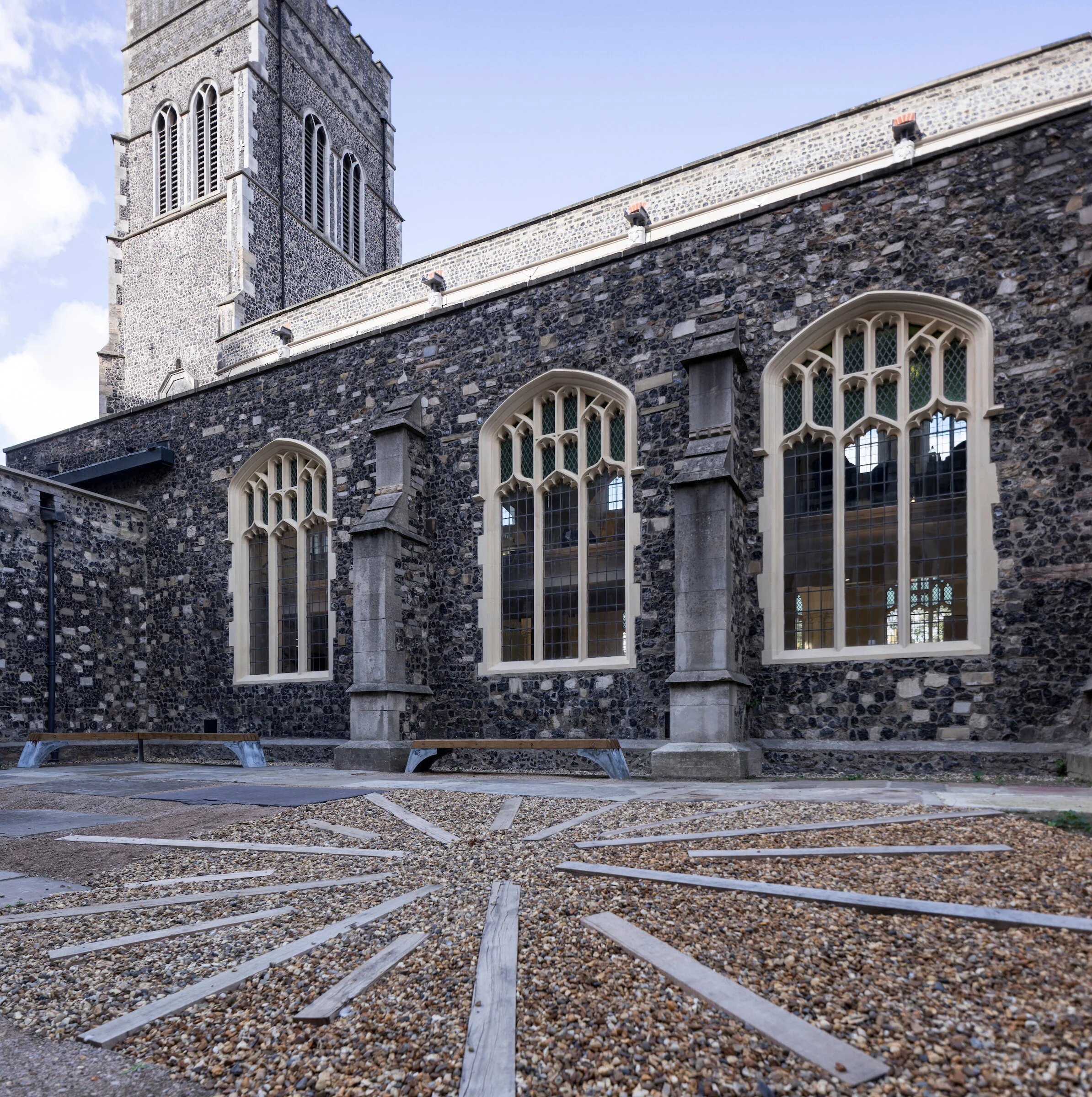
St Mary at the Quay, Ipswich
Are there any areas within Conservation Architecture that you have seen evolve?
The relationship between conservation and sustainability has strengthened dramatically since I began my career in 2006. Long‑standing heritage knowledge about healthy buildings and breathable, natural materials is now informing a new generation of sustainable products and approaches—though this thinking is still becoming mainstream.
Heritage is also gaining greater recognition in the media and through awards, which helps clients understand how conservation can support their own climate ambitions. It shows that responsible stewardship, low‑carbon thinking, and long‑term value are not separate conversations but part of the same framework.
These strands—heritage insight, sustainable practice, and client engagement—are now aligning in a way that strengthens both the discipline and the built environment.
To read more about our conservation services please click here.
If you are interested in reading more about a project where Edward’s conservation expertise was required recently click here.