How to repair a traditional slate roof?
Conservation Series: Slate
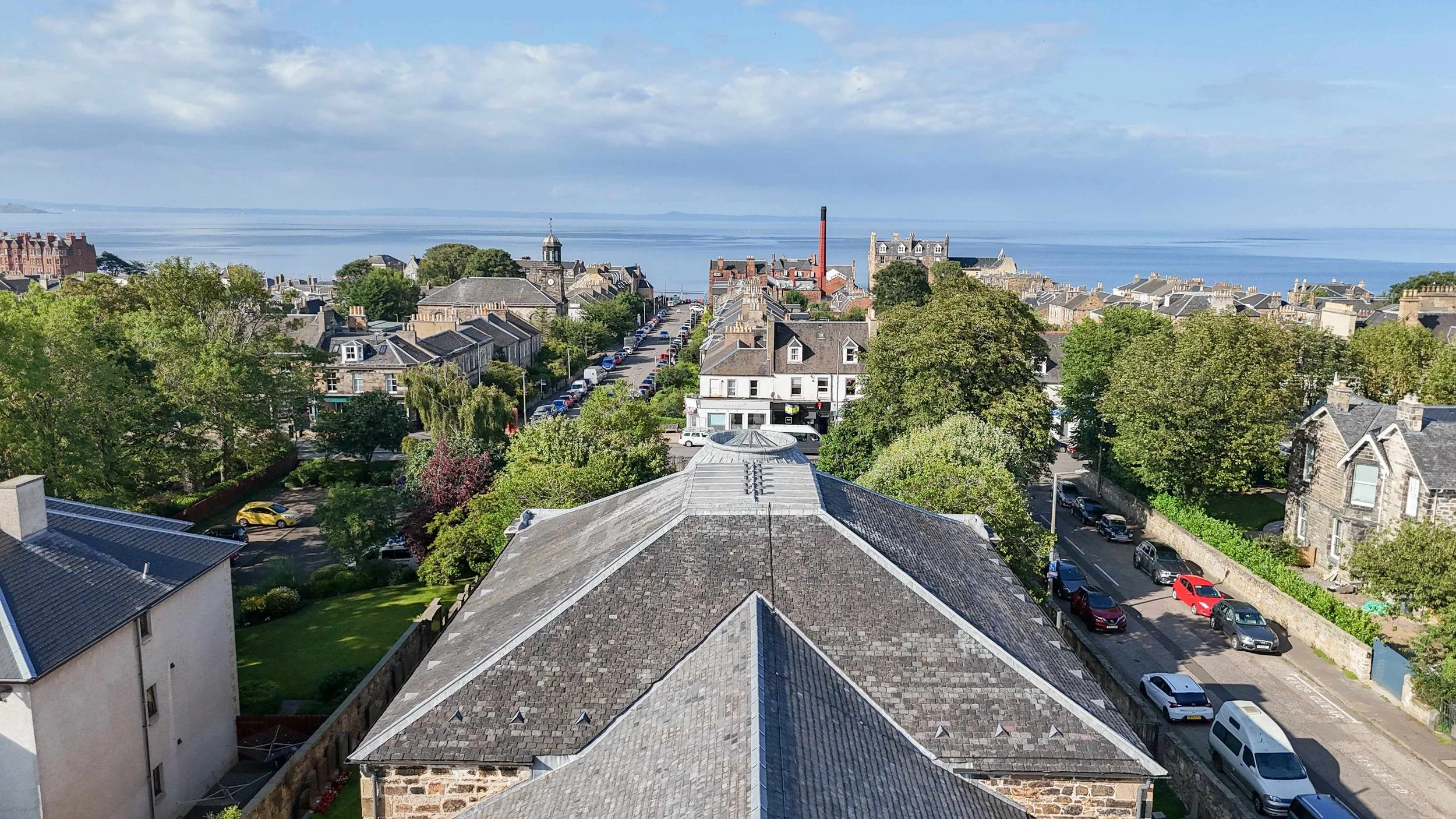
Across Scotland, the dark grey sweep of a slate roof is more than a practical covering — it is part of the nation’s architectural identity. From crofts and cottages to cathedrals, mills, and museums, slate has shaped the character of Scottish settlements for centuries. First used in the 12th century, it became a preferred material for its durability, fire resistance, and its availability near coastal ports where it could be easily transported.
-
Scottish slate roofs are defined by two hallmark features:
Single head‑nailing, which allows individual slates to be replaced without disturbing the surrounding roof.
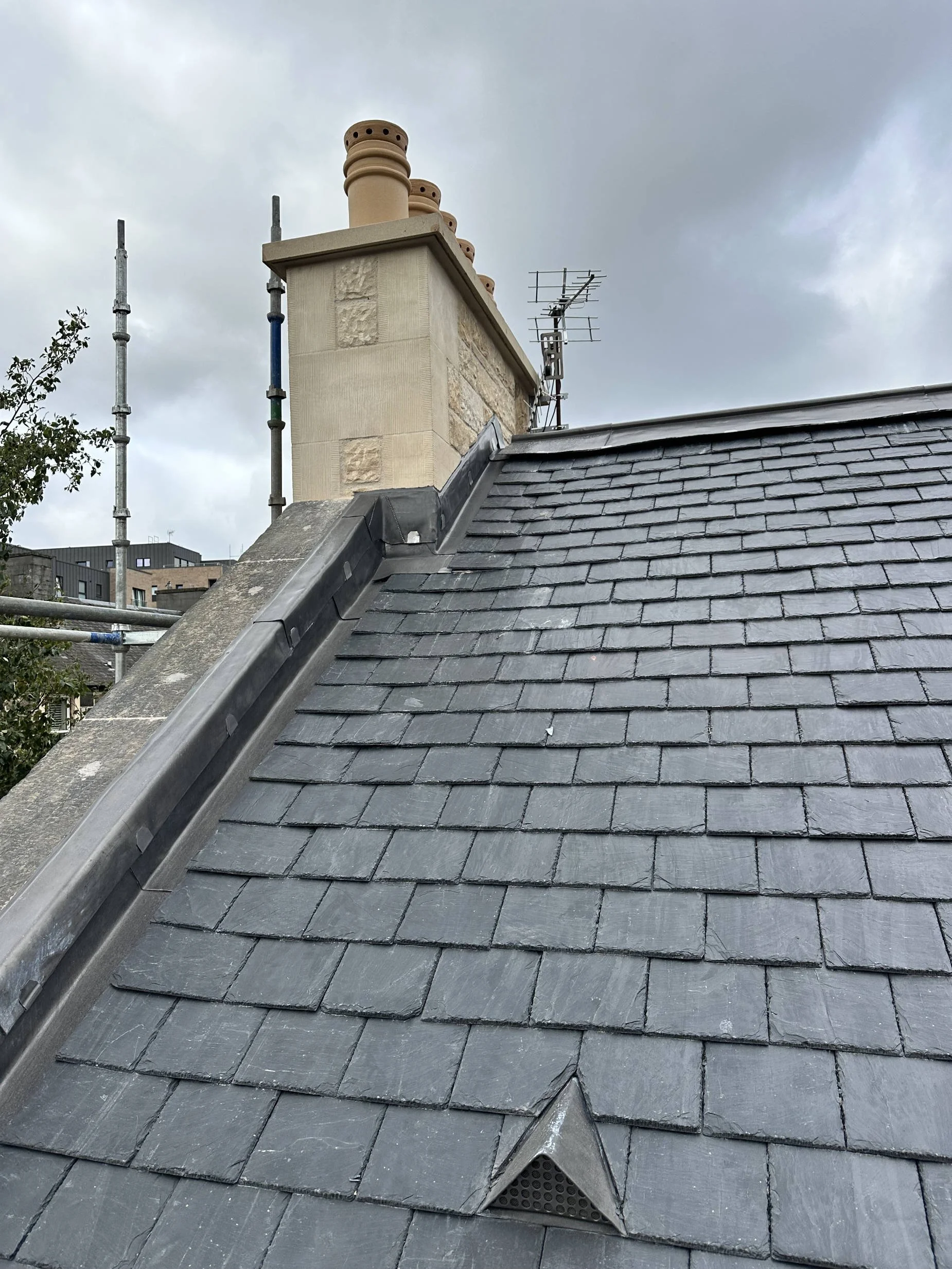
Diminishing courses, where larger slates are laid at the eaves and progressively smaller slates are used towards the ridge.
These details are not simply aesthetic traditions — they evolved from the practical realities of Scottish quarrying and climate.
-
Diminishing courses offer several advantages:
Efficient use of material: Natural slate varies in size; using a range reduces waste.
Reduced structural load: Smaller slates at the top lighten the roof where the structure is most sensitive.
Improved weather performance: Increased overlap and tighter joints enhance resistance to wind‑driven rain — essential in Scotland’s exposed landscapes.
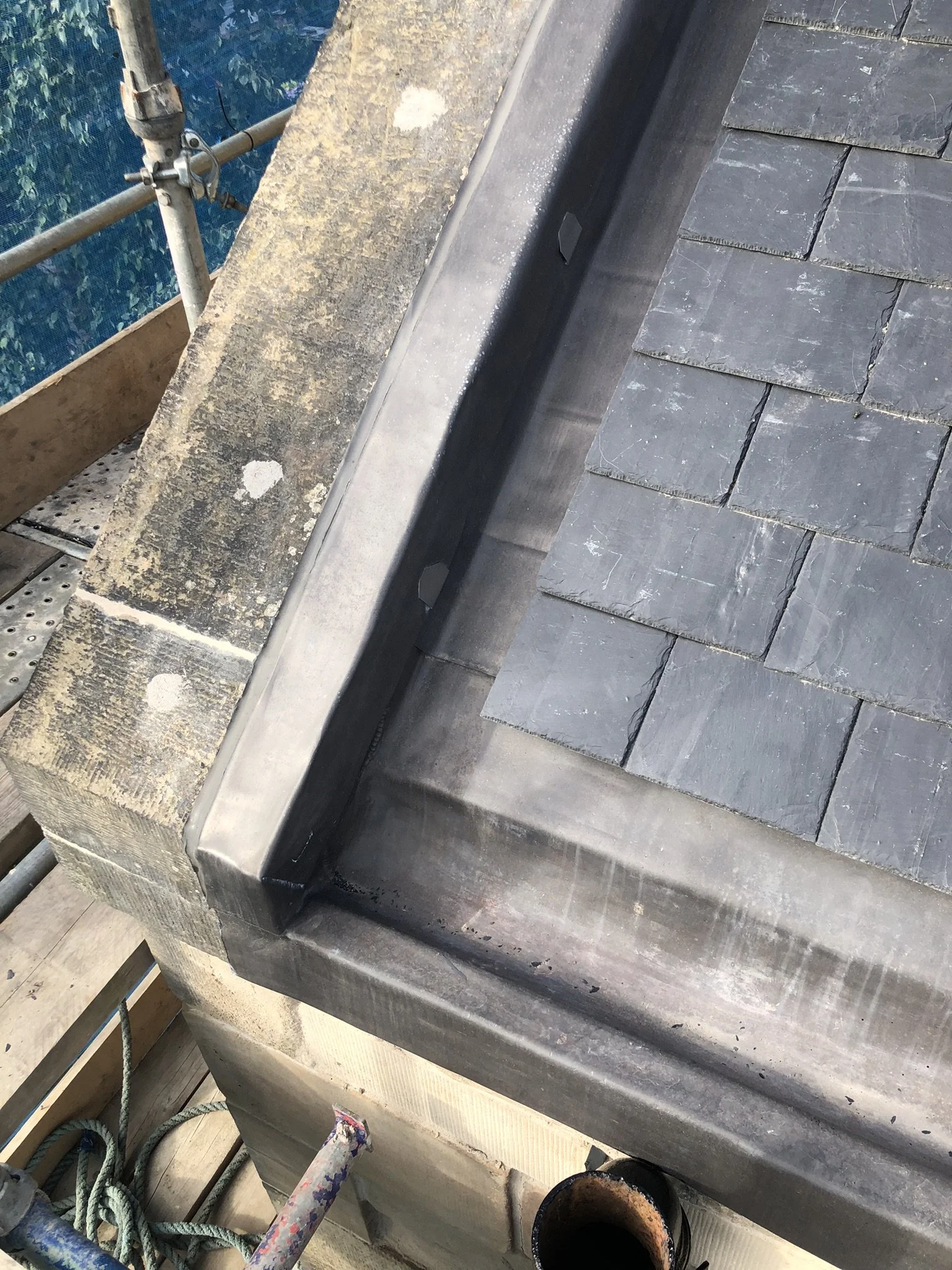
The partners to slate are lead and rainwater drainage goods. The lead is used to seal flashings at junctions, joints and horizontal planes from water ingress and the drainage goods ensure high volumes of water are removed from the roof quickly.
-
A well‑detailed Scottish slate roof can last 100 years or more. While installation costs are high, the long lifespan and ease of repair make slate one of the most economical roofing materials over time.
From a sustainability perspective, slate performs exceptionally well:
Durable and long‑lasting, reducing replacement cycles
Repairable, with individual slates easily swapped
Often reclaimed, extending the life of historic material
Potentially locally sourced, reducing transport emissions
Aesthetically, slate roofs contribute a distinctive, high‑quality character that defines many Scottish towns and rural settlements.
-
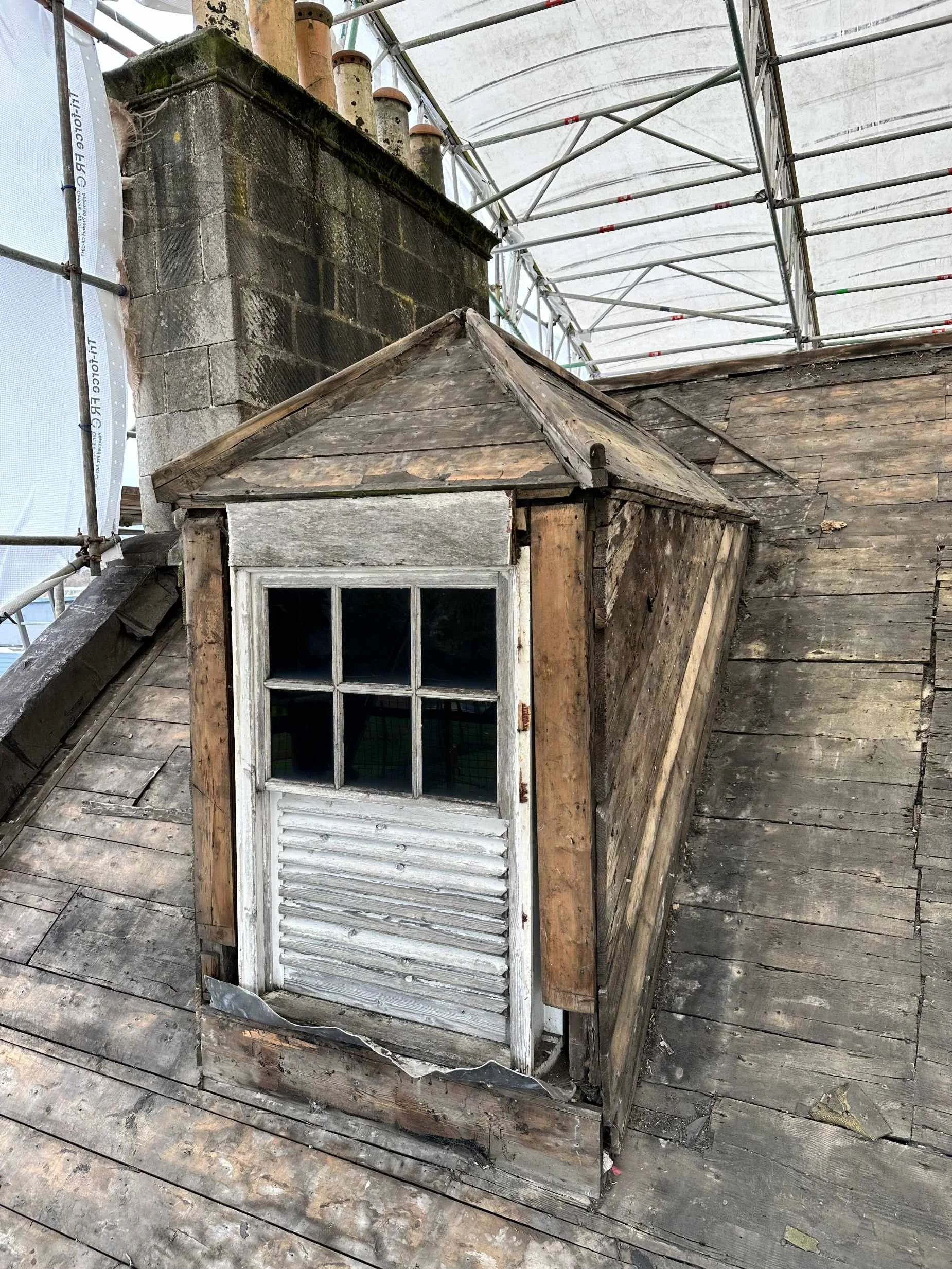
Understanding typical issues helps owners and custodians spot problems early:
Slipped or missing slates — often caused by failed nails or wind uplift; usually a straightforward repair.
Nail sickness — corrosion of original iron nails, leading to widespread slipping; may indicate the need for partial or full re‑slating.
Damaged or split slates — can result from frost, impact, or natural ageing.
Defective leadwork — cracks, splits, or poor past repairs can cause leaks at junctions.
Cement fillets — a common but inappropriate past repair; cement traps moisture and accelerates decay.
Moss and vegetation — usually cosmetic but can hold moisture; may indicate poor ventilation or shading.
-
Slate roofs require relatively little maintenance, but regular checks are essential:
Annual or biennial visual inspections, ideally from ground level or by a professional
Clearing gutters, valleys, and rhones to prevent water backing up
Checking lead flashings for splits or movement
Avoiding pressure washing, which can damage slate surfaces
Ensuring adequate ventilation, especially if insulation has been added internally
Proactive maintenance significantly extends the life of both slate and leadwork.
-
Imported slates — often from Spain, China, or Brazil — vary widely in quality. While they can be suitable for non‑designated buildings, there are important differences:
Colour and texture: Scottish slate has a distinctive dark grey tone and fine grain.
Thickness and durability: Many imported slates are thinner and may weather differently.
Longevity: High‑quality Scottish slate can outlast many imported alternatives by decades.
Visual continuity: On historic buildings, matching the original slate is essential for authenticity.
For listed buildings and conservation areas, like‑for‑like replacement is usually required.
-
If your building is listed or within a conservation area, alterations are typically restricted. However, some changes are more likely to be accepted:
Slate vents at low and high levels, especially when insulation is added beneath the roof
Conservation‑style rooflights, sensitively positioned and proportioned
Repairs using reclaimed Scottish slate, ensuring visual and material continuity
For buildings outside designated areas, there is more flexibility — but any change should still respect the building’s character and the wider streetscape.
-
As interest grows in low‑carbon, locally sourced materials, slate is experiencing a resurgence. After more than 60 years of closure, the historic quarry on the Isle of Luing has reopened, with production resuming in 2026. This marks a significant moment for Scottish construction:
A local supply of high‑quality slate
Reduced reliance on imports
Support for traditional craft skills
A material that aligns with contemporary sustainability goals
The revival of Scottish slate connects past and future — honouring centuries of craft while supporting a more resilient, low‑carbon built environment.
To read more about our conservation, planning and fabric repair services please click here.
Do you have a slate roof on a historic building that you would like to talk to us about? Get in touch here or below.